
Reimagining High Schools: Turning Enrollment Declines into Educational Innovation
The landscape of education is constantly evolving, and for many high schools, this evolution is being accelerated by shifting demographics.As student enrollment numbers decline in certain regions, a critical question emerges: how can school districts transform these challenges into opportunities for creating more engaging, effective, and future-ready high school experiences?
This isn't just about managing retrenchment; it's about a profound redesign that can benefit every student.
The Inevitable Shift: Declining Enrollment and Its Impact on High Schools
Across various educational districts, a clear trend is emerging: declining student populations.This phenomenon, driven by a confluence of factors including lower birth rates and changing migration patterns, is placing significant pressure on the operational and financial stability of many educational institutions.
While historically, elementary and middle schools have been the primary focus of consolidation efforts, research and expert analysis indicate that high schools will also face this reality in the coming years.
This presents a pivotal moment, urging a proactive approach to reimagine what high school education can and should be.
The data suggests that the traditional model, which has served generations, may no longer be the most effective for preparing today's students for the complexities of the modern world.
Understanding the Data: Enrollment Trends and Projections
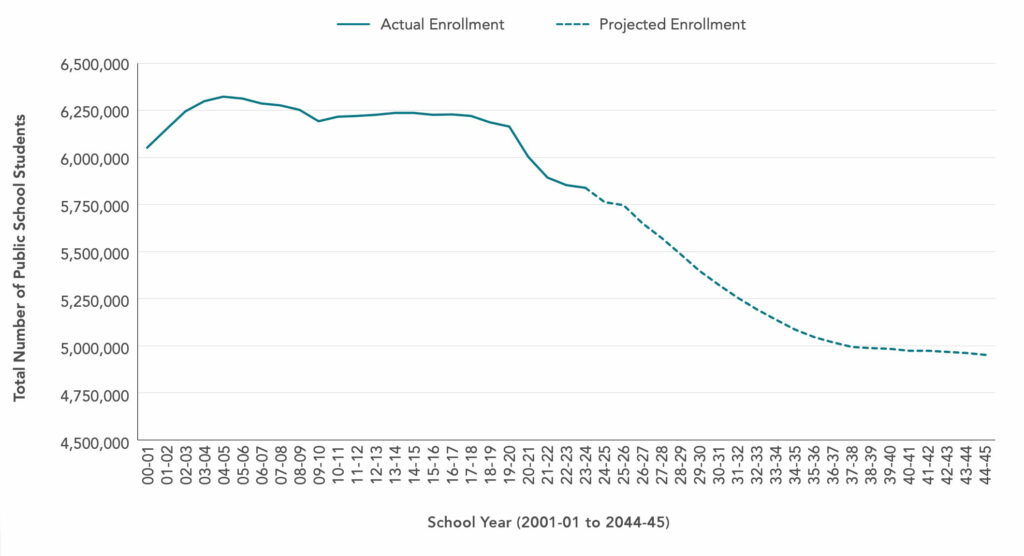
Studies and demographic projections consistently highlight a downward trend in student enrollment in many areas.After reaching a peak in the early 2000s, the numbers have gradually receded, a trend that has been further amplified by recent societal shifts.
Forecasts indicate a continued decline, meaning that districts will need to adapt their infrastructure and educational offerings to serve a smaller student body.
This isn't a localized issue but a widespread trend that necessitates strategic planning at all levels of educational governance.
The impact will be felt across all grade levels, but the unique nature of high schools means their transformation will require particular attention.
Seizing the Opportunity: Redesigning High School for Engagement and Success
Rather than viewing declining enrollment solely as a crisis, forward-thinking educators and policymakers are embracing this period as a catalyst for innovation.The imperative is clear: to create high schools that are not only sustainable but also deeply engaging and relevant for every student.
This involves a fundamental re-evaluation of curriculum, pedagogy, and the very structure of the school day and year.
The goal is to foster environments where students feel connected, inspired, and well-prepared for their post-secondary journeys, whether that leads to higher education, vocational training, or direct entry into the workforce.
Rethinking Traditional Structures: Schedules and Learning Environments
One of the most significant areas for potential transformation lies in the traditional seven-period school day.Research indicates that rigid schedules can sometimes hinder deep learning and limit opportunities for personalized educational pathways.
Exploring alternative scheduling models, such as block scheduling or project-based learning frameworks, can allow for more in-depth exploration of subjects and foster greater student autonomy.
Furthermore, the physical learning environment itself can be reimagined.
Instead of isolated classrooms, consider creating flexible learning spaces that encourage collaboration, interdisciplinary projects, and a more dynamic educational experience.
Expanding Pathways: Dual Enrollment and Apprenticeships
To provide students with a richer and more diverse set of post-secondary options, expanding access to dual enrollment courses and apprenticeship opportunities is crucial.Partnering with community colleges and universities allows high school students to earn college credit while still in high school, significantly reducing the time and cost of higher education.
Similarly, robust apprenticeship programs, developed in collaboration with local businesses and industries, offer invaluable hands-on experience and a direct route to skilled employment.
These initiatives not only enhance student preparedness but also strengthen the connection between education and the economy.
The Power of Partnerships: Leveraging External Resources
Successfully navigating these transformations often requires a collaborative approach.Forming strategic partnerships with government agencies, businesses, non-profit organizations, and community stakeholders can unlock new resources and expand educational possibilities.
These collaborations can help offset costs, provide specialized expertise, and create unique learning opportunities that might otherwise be unattainable.
For example, a partnership with a local health agency could lead to the development of health and life sciences learning hubs within a district, offering specialized programs and real-world experience.
Addressing the Challenges: Funding, Community, and Innovation
While the opportunity for redesign is significant, it's important to acknowledge the inherent challenges.Redesigning educational systems can, paradoxically, require initial investment.
However, creative funding strategies and a focus on long-term benefits can make these transformations achievable.
Innovative Funding Models and Resource Allocation
Districts can explore various strategies to fund these new initiatives.This might include leveraging funds from the sale of underutilized properties to invest in new programs or infrastructure.
Furthermore, seeking grants and external funding from foundations and government programs specifically aimed at educational innovation can provide crucial support.
A critical re-examination of how existing funds are allocated within districts can also reveal opportunities to redirect resources towards more impactful programs and student-centered learning.
Building Community Support and Overcoming Resistance
High schools often hold a special place in the hearts of communities, serving as alma maters and central hubs for local activities.When consolidation or significant changes are proposed, it's natural for there to be emotional attachments and potential resistance.
Open communication, transparent planning processes, and actively involving community members in the redesign discussions are essential.
Highlighting the benefits of the proposed changes – such as enhanced student opportunities, improved educational outcomes, and a more relevant curriculum – can help build consensus and foster support.
Policy and Legislative Support for Educational Evolution
State and local policies play a crucial role in either enabling or hindering educational innovation.Examining and, where necessary, revising existing regulations that may stifle creativity can pave the way for more flexible and responsive high school models.
This could involve advocating for legislative changes that support inter-district collaboration, streamline property utilization for educational purposes, or adapt funding formulas to better reflect the diverse needs of modern high schools.
The goal is to create a policy environment that encourages experimentation and supports the evolution of educational practices.
Case Studies in Transformation: Inspiring Examples of High School Redesign
Across the nation, districts are already demonstrating innovative approaches to high school education in the face of changing demographics.These examples offer valuable insights and practical models for other districts seeking to reimagine their educational offerings.
The Rise of Specialized Learning Hubs
Some districts are moving towards creating specialized learning hubs, where multiple high schools can share facilities, resources, and specialized courses.This model allows for the development of in-depth programs in areas like STEM, the arts, or vocational trades, providing students with access to expertise and equipment that might be difficult to replicate in smaller, individual schools.
These hubs can also foster interdisciplinary learning and collaboration among students from different schools within a district.
Integrating Community Resources for Enhanced Learning
Innovative districts are actively integrating community resources into the fabric of their high schools.This can involve transforming public libraries into educational and innovation centers, creating on-site wellness centers staffed by external health providers, or developing robust partnerships with local businesses for internships and career exploration.
These integrations not only enrich the student experience but also demonstrate the school's commitment to serving as a vital community asset.
Conclusion: A Future-Ready Vision for High Schools
The challenges presented by declining enrollment are undeniable, but they also offer a unique and powerful opportunity to fundamentally rethink and rebuild high school education.By embracing innovation, fostering collaboration, and prioritizing student engagement, districts can transform these transitional periods into springboards for creating more effective, equitable, and inspiring learning environments.
The future of high schools lies not in clinging to outdated models, but in boldly reimagining them to meet the evolving needs of students and society.






 Explore AI Teaching Tools
Comments (0)
Please login to comment
No comments yet
Be the first to comment on this article