
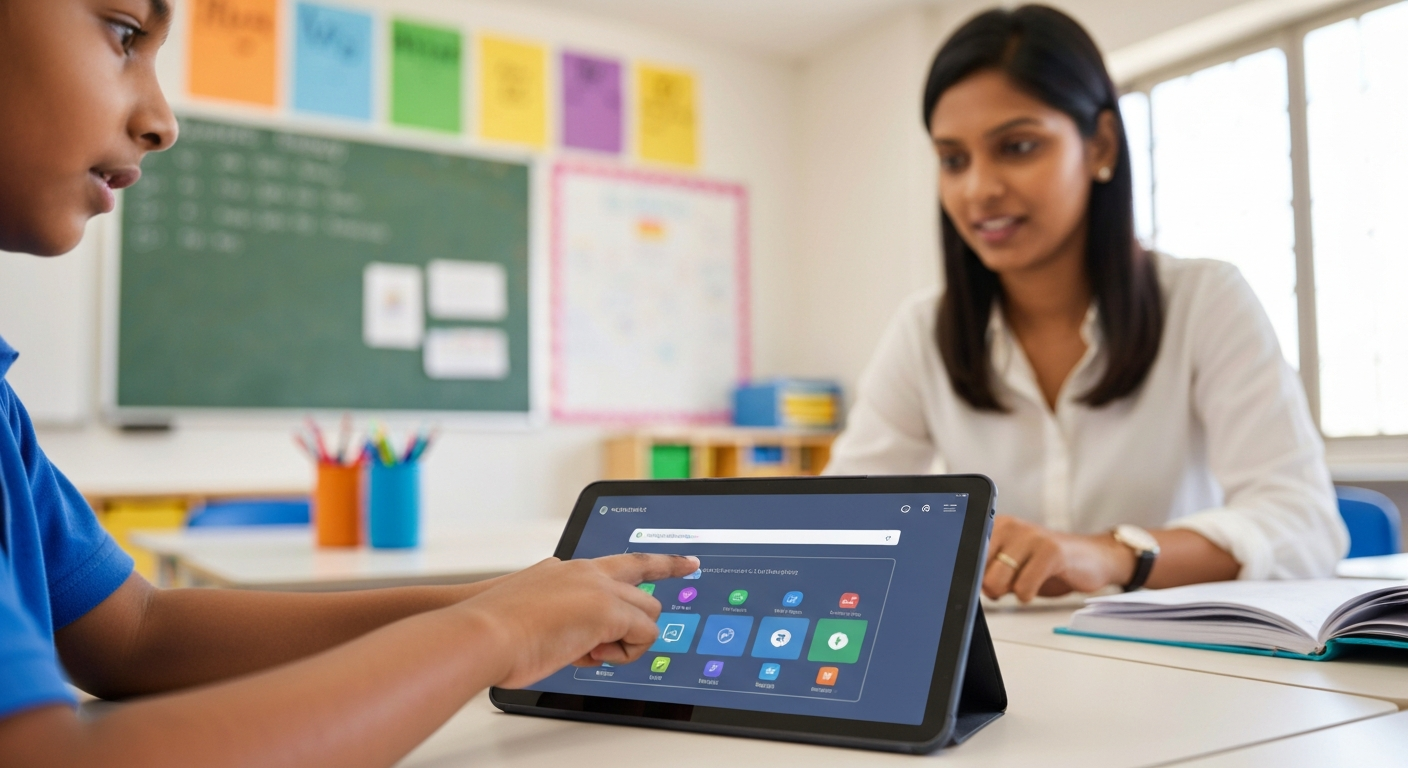
The modern classroom is a vibrant, dynamic space, often best navigated through collaboration. Co-teaching, where two or more educators share instructional responsibility for a single group of students, has emerged as a powerful strategy to enhance student learning, provide diverse perspectives, and create a more supportive educational environment. However, effective co-teaching demands seamless coordination, shared resources, and efficient communication – challenges that can sometimes overshadow its immense potential.
Imagine a world where the administrative burden of co-teaching is significantly lightened, allowing you and your partner to focus on what truly matters: inspiring students. This article will explore how shared AI tools can revolutionize co-teaching, transforming common challenges into opportunities for unprecedented collaboration and effectiveness. From synchronized lesson planning to dynamic student engagement and streamlined assessment, you'll discover practical tips and strategies to leverage AI for a more harmonious and impactful co-teaching experience, ultimately enriching your pedagogical practice and enhancing the Mentofy AI teaching tools available to you.
1. Harmonizing Planning: AI for Unified Curriculum Development
One of the foundational pillars of successful co-teaching is collaborative planning. Without a shared vision and meticulously coordinated efforts, even the most dedicated co-teachers can find themselves out of sync. Traditional planning can be time-consuming, involving multiple meetings, email exchanges, and document sharing. This is where shared AI tools become indispensable, acting as a central hub for curriculum development and resource creation.
Leveraging AI for Lesson Plan Generation
Imagine you and your co-teacher need to develop a unit on ecosystems for a diverse group of learners, including students with varying reading levels and language proficiencies. Instead of one person drafting and the other editing, you can both access an AI-powered platform to generate initial lesson plans. Tools like Mentofy Academia allow you to input curriculum standards, learning objectives, and student profiles, generating comprehensive lesson plans in minutes. This means:
- Instant Drafts: AI provides a robust starting point, saving hours that would otherwise be spent on initial brainstorming and outlining.
- Differentiated Pathways: You can prompt the AI to create differentiated activities or content modifications for specific student groups, ensuring all learners are catered for from the outset.
- Shared Access & Iteration: Both co-teachers can access the same AI-generated plan, make real-time edits, and add notes, ensuring full transparency and shared ownership. This transforms planning from a sequential handover into a simultaneous, collaborative process.
This approach ensures that the "teacher education resources" you develop are consistent, comprehensive, and tailored to your shared students' needs, fostering a truly unified instructional approach.
Co-Creating Engaging Activities and Resources
Beyond the core lesson plan, co-teachers often need to develop supplementary materials: worksheets, graphic organizers, discussion prompts, or project rubrics. AI can assist in generating these too. For instance, if you're teaching a literature unit, one co-teacher might use AI to generate a list of open-ended discussion questions for a specific chapter, while the other uses it to create a vocabulary quiz. These resources are then instantly available within your shared platform, ready for review and integration by both educators.
- Efficiency in Resource Creation: AI significantly speeds up the creation of high-quality, relevant materials.
- Consistency Across Instruction: By using a shared AI framework, the tone, style, and learning objectives embedded in your resources remain consistent, regardless of which co-teacher initially generated them.
- Reduced Duplication: A centralized repository of AI-generated resources prevents accidental duplication of effort and ensures that both teachers are aware of all available materials.
2. Streamlining Assessment & Feedback with AI
Assessment is a critical component of teaching, providing insights into student learning and guiding future instruction. In a co-taught setting, ensuring consistent, fair, and timely feedback can be challenging. Shared AI tools offer powerful solutions to streamline the assessment process, from exam creation to grading and analysis.
Collaborative Exam Generation
When preparing for a summative assessment, co-teachers often spend considerable time crafting questions that accurately reflect the curriculum taught by both. Mentofy Academia's exam generation feature, with its 25+ question types, can be a game-changer. One co-teacher might focus on multiple-choice and true/false questions, while the other generates open-ended or essay prompts, all within the same AI environment. The shared nature of the platform means:
- Balanced Assessment: Co-teachers can ensure a balanced mix of question types and difficulty levels, reflecting the combined instructional focus.
- Reduced Bias: By collaboratively reviewing AI-generated questions, potential biases or ambiguities can be identified and corrected before the exam is administered.
- Rapid Iteration: If a specific learning objective needs more emphasis, new questions can be quickly generated and integrated by either teacher.
This collaborative approach to creating "teacher education resources" ensures that assessments are robust and reflective of the entire co-taught curriculum.
Automated and Consistent Grading with Vision AI
Grading handwritten assignments or essays can be particularly time-consuming, and ensuring consistency between co-teachers can be a concern. Mentofy Academia's Vision AI auto-grading feature addresses this directly. Students can submit handwritten work, which Vision AI then scans and grades based on predefined rubrics and answer keys. For co-teachers, this means:
- Uniform Grading Standards: Vision AI applies the same criteria to every submission, eliminating potential discrepancies in grading between co-teachers.
- Time Savings: The significant reduction in manual grading time frees up co-teachers to focus on providing more personalized, qualitative feedback or planning interventions.
- Shared Data Insights: Both teachers have immediate access to grading results and analytics, allowing for joint analysis of student performance and identification of areas where additional support might be needed. This shared data becomes invaluable for targeted interventions and modifications to future instruction.
3. Dynamic Student Grouping & Management for Differentiated Instruction
Effective co-teaching often involves flexible grouping strategies to meet diverse student needs, support collaborative learning, and facilitate differentiated instruction. Manually creating and managing these groups can be a logistical challenge. Shared AI tools, particularly those designed for classroom management, can transform this process into an efficient and data-driven endeavor.
Smart Grouping with MentofyGroups
MentofyGroups provides intelligent student grouping capabilities that are invaluable for co-teachers. Instead of laboriously sorting students by hand, one co-teacher can input various parameters – academic performance, learning styles, personality traits, or even specific skills – and the AI generates optimal group configurations. This allows co-teachers to:
- Strategically Form Groups: Create balanced groups for collaborative projects, homogeneous groups for targeted intervention, or mixed-ability groups for peer tutoring.
- Adapt to Learning Objectives: Easily reconfigure groups based on the day's lesson objectives, ensuring that grouping always supports the instructional goal.
- Seamless Integration: If your school uses Google Classroom, MentofyGroups can import your rosters, making the setup process even smoother.
This feature empowers co-teachers to implement various co-teaching models, such as parallel teaching or station teaching, with minimal preparation time.
Facilitating Engagement with Icebreakers and Attendance
Beyond grouping, MentofyGroups also offers a suite of tools to enhance classroom management and student engagement, all accessible to both co-teachers:
- Collaborative Icebreakers: With 10 types of icebreakers available, co-teachers can collaboratively choose and launch activities to foster a positive classroom climate and encourage student interaction, especially important when transitioning between different co-teaching strategies.
- Shared Attendance Tracking: One co-teacher can manage attendance while the other focuses on instruction, with all records automatically synchronized and accessible to both. This eliminates duplicate efforts and ensures accurate, real-time data.
- Enhanced Co-Teacher Support: The platform is designed with co-teacher support in mind, allowing both educators to manage settings, monitor student activity, and access data simultaneously, fostering a truly integrated management approach.
By centralizing these management tasks, co-teachers can ensure a consistent and well-managed learning environment, freeing them to focus on instruction rather than administration.
4. Elevating Engagement: Interactive Tools for Dynamic Classrooms
Engaging students in a co-taught classroom requires a diverse toolkit of interactive strategies. Shared AI tools can provide a rich array of dynamic resources that both co-teachers can deploy to capture student attention, foster participation, and make learning more memorable. Forget the days of one teacher managing the whiteboard while the other tries to circulate; AI allows for simultaneous, multi-faceted engagement.
MentofyCove: Collaborative Classroom Games
Injecting fun and competition into learning is a proven way to boost engagement. MentofyCove offers a suite of live MentofyCove classroom games (Word Search, Trivia, Hangman, Crossword, Anagram, Group Words) that are perfect for co-taught classrooms. Imagine:
- Simultaneous Facilitation: One co-teacher can manage the game interface, projecting it onto the main screen, while the other circulates among student groups, providing support, clarifying rules, and encouraging participation.
- Pre-Prepared Content: Co-teachers can collaboratively create game content (e.g., trivia questions related to a history lesson or vocabulary for a science unit) beforehand, ensuring it aligns with their shared learning objectives.
- Instant Feedback & Review: After a MentofyCove classroom games session, both teachers have access to student performance data, allowing them to jointly review concepts, address misconceptions, and celebrate successes. This shared insight is crucial for informing future instruction.
These interactive games serve as excellent "teacher education resources" for making complex topics accessible and enjoyable.
MentofyBoards: Interactive Classroom Display Widgets
An interactive board is no longer just a digital whiteboard; it's a dynamic control panel for your classroom. MentofyBoards offers 18 interactive widgets that co-teachers can use in tandem to manage the classroom environment and facilitate activities:
- Shared Control: One co-teacher might use the countdown timer to manage group work, while the other uses the scoreboard to track team progress during an activity. Both have access and control, ensuring seamless transitions and management.
- Real-time Polling: Quickly gauge student understanding or opinions with the poll widget, allowing both teachers to see immediate results and adapt their instruction on the fly.
- Noise Monitoring: Use the noise monitor widget to maintain an optimal learning environment, with both co-teachers aware of classroom sound levels.
- Randomization: Utilize the dice or random name picker for fair participation or group formation, managed by either teacher.
The ability for both co-teachers to manipulate and utilize these widgets simultaneously transforms the interactive board into a truly collaborative teaching tool, enhancing classroom flow and student engagement.
5. Fostering Professional Growth & Shared Best Practices
Beyond the immediate benefits to students, co-teaching is a powerful form of professional development. By working closely together, educators learn from each other's strengths, strategies, and perspectives. Shared AI tools can amplify this professional growth, transforming the collaborative process into a continuous learning journey for both teachers.
Data-Driven Reflection and Strategy Adjustment
AI platforms collect a wealth of data – from student performance on assessments and games to participation in interactive activities. When this data is accessible to both co-teachers, it becomes a potent tool for shared reflection and strategic adjustment:
- Joint Performance Analysis: After an assessment created with Mentofy Academia, both teachers can review student performance data, identify common areas of struggle, and pinpoint effective teaching strategies. This allows for a united front in addressing learning gaps.
- Evaluating Engagement: Data from MentofyCove games or MentofyBoards polls can reveal which activities resonated most with students, helping co-teachers refine their approach to engagement.
- Informed Decision-Making: Instead of relying on individual observations, co-teachers can base their discussions and instructional decisions on concrete, shared data, leading to more effective and evidence-based practices. This shared access to performance metrics becomes a valuable "teacher education resources" for continuous improvement.
Building a Collaborative Resource Library
As co-teachers utilize AI to generate lesson plans, activities, and assessments, they are simultaneously building a rich, shared library of Mentofy AI teaching tools. This repository becomes an invaluable asset for future planning and a testament to their collaborative efforts:
- Reusable Content: Lessons, quizzes, and activities that proved successful can be easily revisited, adapted, and reused in subsequent years or with different groups.
- Shared Knowledge Base: The platform serves as a living document of their combined pedagogical knowledge, reflecting their evolution as a co-teaching team.
- Mentorship & Onboarding: For new co-teaching pairs or when one teacher joins an existing team, this shared resource library provides an instant immersion into the team's established practices and curriculum, significantly easing the onboarding process.
This shared ecosystem of AI-generated content fosters a culture of continuous learning and resourcefulness, making it a cornerstone of ongoing professional development.
6. Enhancing Communication and Role Clarity
Clear communication and well-defined roles are paramount in co-teaching. Misunderstandings about responsibilities or instructional approaches can lead to confusion for both teachers and students. Shared AI tools, by centralizing information and facilitating synchronized actions, inherently improve communication and help delineate roles more effectively.
Centralized Information and Synchronized Actions
When all planning documents, student data, and interactive tools reside within a shared AI platform, it creates a single source of truth for both co-teachers. This eliminates the need for constant back-and-forth emails or verbal updates on every detail. For example:
- Shared Lesson Plans: As discussed, Mentofy Academia allows both teachers to see the most up-to-date version of the lesson plan, including any modifications or notes, ensuring they are always on the same page regarding objectives, activities, and differentiation strategies.
- Consistent Student Records: Whether it's attendance tracked via MentofyGroups or grades from Vision AI, both teachers have real-time access to the same student data, allowing for consistent conversations with students and parents.
- Coordinated Classroom Management: If one teacher adjusts a setting on MentofyBoards, the other immediately sees the change, preventing conflicting instructions or redundant actions.
This synchronization minimizes miscommunication and ensures that both teachers are working from the same playbook, enhancing their collaborative synergy.
Facilitating Role Delineation and Flexibility
While co-teaching often involves dynamic role-sharing, having a clear understanding of who is primarily responsible for what, even for a single lesson, is beneficial. Shared AI tools support this by:
- Pre-Assigning Tasks: During the planning phase using AI lesson plan generators, co-teachers can explicitly assign responsibilities for specific sections or activities within the digital plan. For instance, "Teacher A leads direct instruction for the first 15 minutes, Teacher B monitors MentofyCove games during group activity."
- Supporting Different Co-Teaching Models: Whether it's "one teach, one assist," "parallel teaching," or "station teaching," AI tools can be configured to support each model. For parallel teaching, both teachers can use AI to generate similar but distinct sets of Mentofy AI teaching tools for their smaller groups. For station teaching, AI can help create varied activities for each station.
- Enhancing On-the-Fly Adaptations: In a dynamic classroom, adjustments are inevitable. If one co-teacher notices a concept isn't landing, they can quickly use an AI tool to generate an alternative explanation or a quick quiz, knowing the other teacher can instantly see and support this shift.
By providing a transparent and adaptable framework, shared AI tools empower co-teachers to define their roles with clarity, execute them with confidence, and adapt collaboratively when needed, ultimately strengthening their partnership and enhancing the effectiveness of their "teacher education resources."
Conclusion
Co-teaching is a powerful pedagogical approach that enriches the learning experience for students and fosters professional growth for educators. However, its success hinges on effective collaboration, streamlined processes, and consistent communication. As we've explored, shared AI tools like Mentofy Academia, MentofyCove, MentofyGroups, and MentofyBoards are not just supplementary technologies; they are transformative partners that can fundamentally enhance every aspect of the co-teaching journey.
From harmonizing lesson planning and streamlining assessment to dynamically grouping students and elevating classroom engagement, AI provides the infrastructure for a truly synchronized and impactful co-teaching environment. It reduces administrative burdens, ensures consistency, and frees up valuable time, allowing co-teachers to focus on their core mission: inspiring and educating every student. By embracing these innovative Mentofy AI teaching tools, co-teachers can move beyond mere coordination to achieve profound collaboration, ultimately creating more effective, engaging, and equitable learning spaces.
Ready to save hours every week? Mentofy is free for teachers — start in under 2 minutes.




 Explore AI Teaching Tools
Comments (0)
Please login to comment
No comments yet
Be the first to comment on this article