
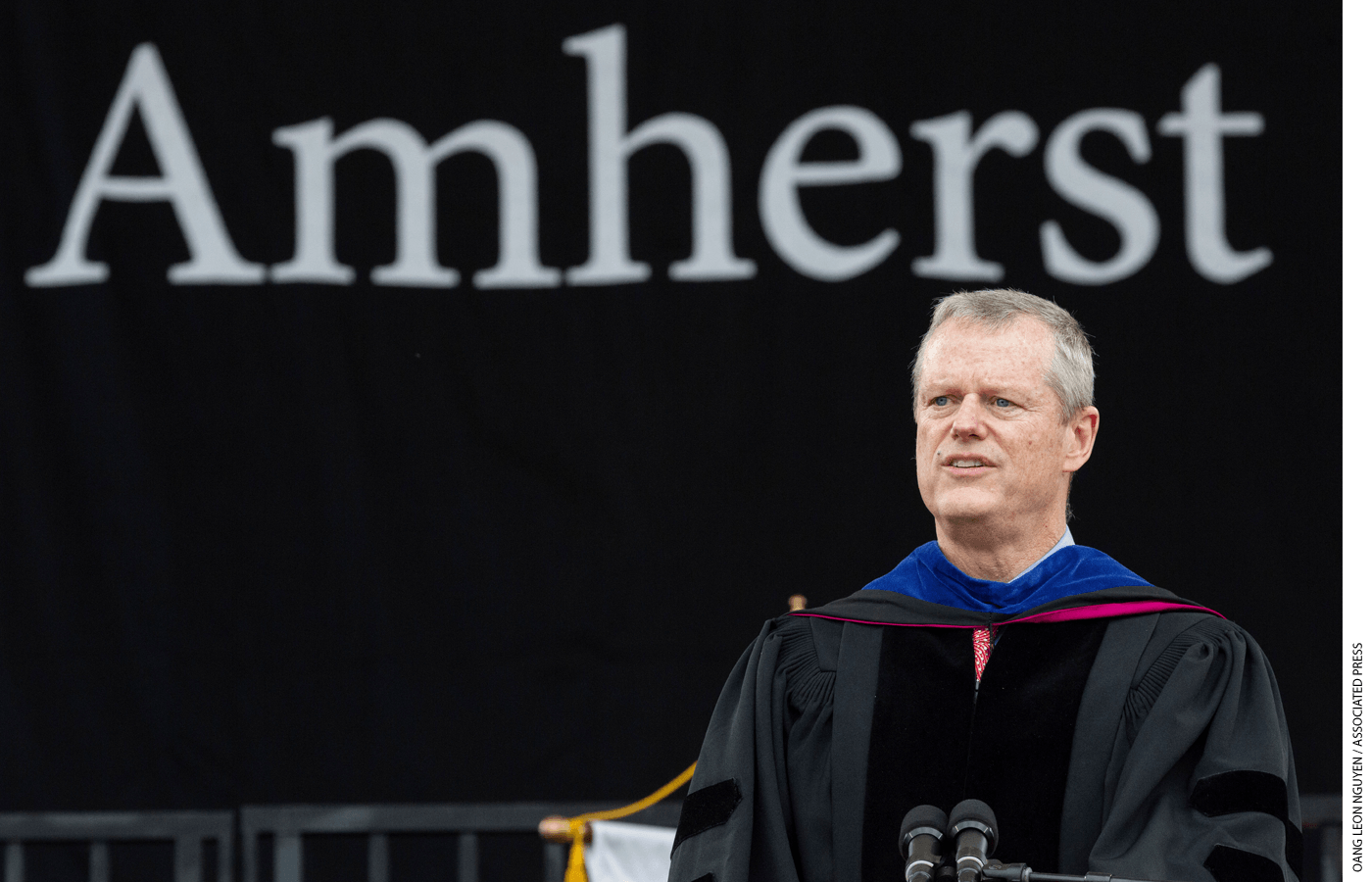
Governors Hold the Keys to Rescuing America's Colleges
A seismic shift is underway in American public opinion, with a significant portion of the populace expressing deep skepticism about the value and purpose of higher education. This erosion of faith coincides with a cascade of complex challenges facing colleges and universities, from precarious funding models and declining enrollment to the disruptive force of artificial intelligence and the ever-present specter of athletic scandals. In this turbulent landscape, a clear, strategic direction is urgently needed.
Fortunately, a powerful lever for change already exists, wielded by those uniquely positioned to enact it: America's governors. Their authority over public education systems places them at the forefront of potential reform, a role not without historical precedent.
Echoes of a Reform Era: Lessons from K-12's Turning Point
Nearly four decades ago, a similar crisis gripped the nation's K-12 schools. In 1989, a remarkable gathering of 49 state governors convened in Charlottesville, Virginia, recognizing the urgent need to address a perceived decline in educational quality. This was in the wake of influential reports, such as "A Nation at Risk," which starkly detailed a deterioration in student achievement.
These governors understood a fundamental truth: the health of public education was a state-level responsibility, not a matter to be solely delegated to federal intervention. They grasped the intrinsic link between robust schools and thriving communities, recognizing their vital role in economic growth and workforce development.
With a natural inclination towards pragmatic problem-solving, these leaders forged a consensus that would come to define an era of educational reform. The resulting "standards and accountability movement" led to clearer learning objectives for students, elevated academic expectations, and the implementation of standardized assessments to gauge progress.
This period also saw a wave of other state-driven innovations, including advancements in teacher preparation, the introduction of school performance report cards, and the expansion of charter schools. Crucially, this era demonstrated that significant educational improvement could be achieved through bipartisan cooperation, with governors from both sides of the political spectrum—like Democrats Bill Clinton and Dick Riley, alongside Republicans Lamar Alexander and Tommy Thompson—leading the charge.
The Higher Education Predicament: A Mirror to the Past?
Today, many Americans perceive higher education to be in a predicament eerily similar to that of K-12 schools in the late 1980s. Doubts about the financial return on a college degree are rampant, with concerns that the investment often fails to yield commensurate career opportunities.
Furthermore, a perception persists that campuses have become overly politicized, often dominated by protests and ideological fervor. Anecdotal evidence and reports suggest a decline in rigorous academic engagement among students, with some questioning the authenticity of academic achievements.
This widespread disillusionment presents an opportunity for governors to once again step into a leadership role, leveraging their authority to steer higher education toward a more productive and valued future.
The Governor's Mandate: Steering the Ship of Public Universities
While elite private universities often capture public attention, it's crucial to recognize that the vast majority of undergraduates—nearly three-quarters—attend public institutions. These are the institutions where governors can exert the most significant influence.
Beyond proposing legislation and shaping budget allocations, governors possess a more potent tool: the appointment of members to the governing boards of public universities. Research indicates that a substantial 87 percent of students enrolled in public universities attend institutions where gubernatorial appointments significantly shape institutional direction.
The Power of the Boardroom
These university boards hold considerable sway. They are responsible for hiring and dismissing college presidents, approving institutional budgets, and making critical decisions about the continuation or discontinuation of academic programs. Their purview extends to setting policies on tuition rates, defining core curriculum requirements, establishing degree stipulations, and shaping campus policies on free speech.
To effectively recalibrate higher education, governors do not require new federal mandates or legislative overhauls. Instead, the most impactful action lies in the careful selection of board members—individuals who are not only accomplished and ethical but also possess the unwavering determination to drive meaningful reform.
This means viewing board seats not as political favors or rewards for loyal donors or athletic boosters, but as critical positions demanding individuals with the requisite knowledge, skills, and temperament to champion a forward-thinking, bipartisan agenda for higher education.
Five Pillars of a Renewed Higher Education Strategy
Based on emerging consensus and critical needs, five key areas stand out as priorities for gubernatorial action and board oversight:
1. Enhancing the "Return on Investment"
A pervasive belief among the public is that the cost of a college education no longer justifies the outcome. Many programs leave students burdened with substantial debt and facing limited employment prospects. This must be addressed.
However, the measure of success cannot solely be future earning potential. A truly valuable education must also cultivate informed and engaged citizens. Universities have a responsibility to produce graduates equipped with a strong understanding of history, literature, and the social sciences, fostering critical thinking and civic participation.
Governing boards can ensure that a college education delivers a dual return on investment: robust preparation for the workforce and the development of responsible citizenship.
2. Expanding and Elevating Alternative Credentials
The traditional four-year degree is not the sole pathway to success for every high school graduate. In a rapidly evolving job market, opportunities for continuous learning and skill development are paramount.
A burgeoning landscape of alternative credentials, including licenses and certificates, now offers pathways to in-demand skills. Universities must strategically define their role within this dynamic ecosystem, particularly as new funding initiatives, such as the "Workforce Pell" program, are directing increased resources toward shorter-term, non-degree programs.
3. Leading on Artificial Intelligence, Responsibly
Universities must be at the vanguard of artificial intelligence research and equip graduates with the skills to navigate an AI-infused professional world. However, a critical challenge has emerged: students are increasingly leveraging AI to complete their academic work.
Higher education institutions must vigorously protect the core processes of learning—critical thinking, problem-solving, in-depth reading, effective writing, and thoughtful discussion. The delegation of these fundamental intellectual tasks to AI tools must be actively prevented.
4. Championing Viewpoint Diversity and Free Inquiry
Preparing students to thrive in a diverse and democratic society requires exposure to a wide spectrum of perspectives. Yet, a discernible shift toward the political left within faculty and administration has led to concerns about ideological homogeneity on many campuses.
Instances of speaker disinvitations and persistent protests have fostered a perception that some universities are driven by a singular political agenda. Higher education must actively cultivate an environment where students are exposed to diverse viewpoints, learning to engage respectfully, listen critically, and collaborate across ideological divides.
5. Addressing the Needs of Young Men
For decades, higher education played a pivotal role in expanding opportunities for women. However, current data reveals a concerning trend: young men are now falling behind in college enrollment, graduation rates, and entry into key graduate programs compared to their female peers.
This demographic faces significant challenges, including higher rates of addiction and unemployment, with a substantial number reporting feelings of failure. Higher education institutions must implement strategies to ensure young men are adequately prepared for college, supported academically and socially during their studies, and are well-equipped for successful careers and community engagement upon graduation.
America has always depended on the strength of its educational institutions and the presence of effective, bipartisan political leadership. Two generations ago, governors demonstrated their capacity to lead on both fronts by revitalizing K-12 education. Today's state executives possess the same potential and the imperative to guide higher education toward a more promising future.





 Explore AI Teaching Tools
Comments (0)
Please login to comment
No comments yet
Be the first to comment on this article