
Beyond the Scoreboard: How Sports Academies Are Redefining Education
In a world increasingly focused on specialized development, a new breed of educational institution is rapidly gaining traction: the sports academy. These schools are not just about honing athletic prowess; they are fundamentally reshaping the student experience by integrating rigorous academics with intensive athletic training, promising a holistic approach to preparing young individuals for success both on and off the field.
The Classroom of Competition: Where Character is Forged
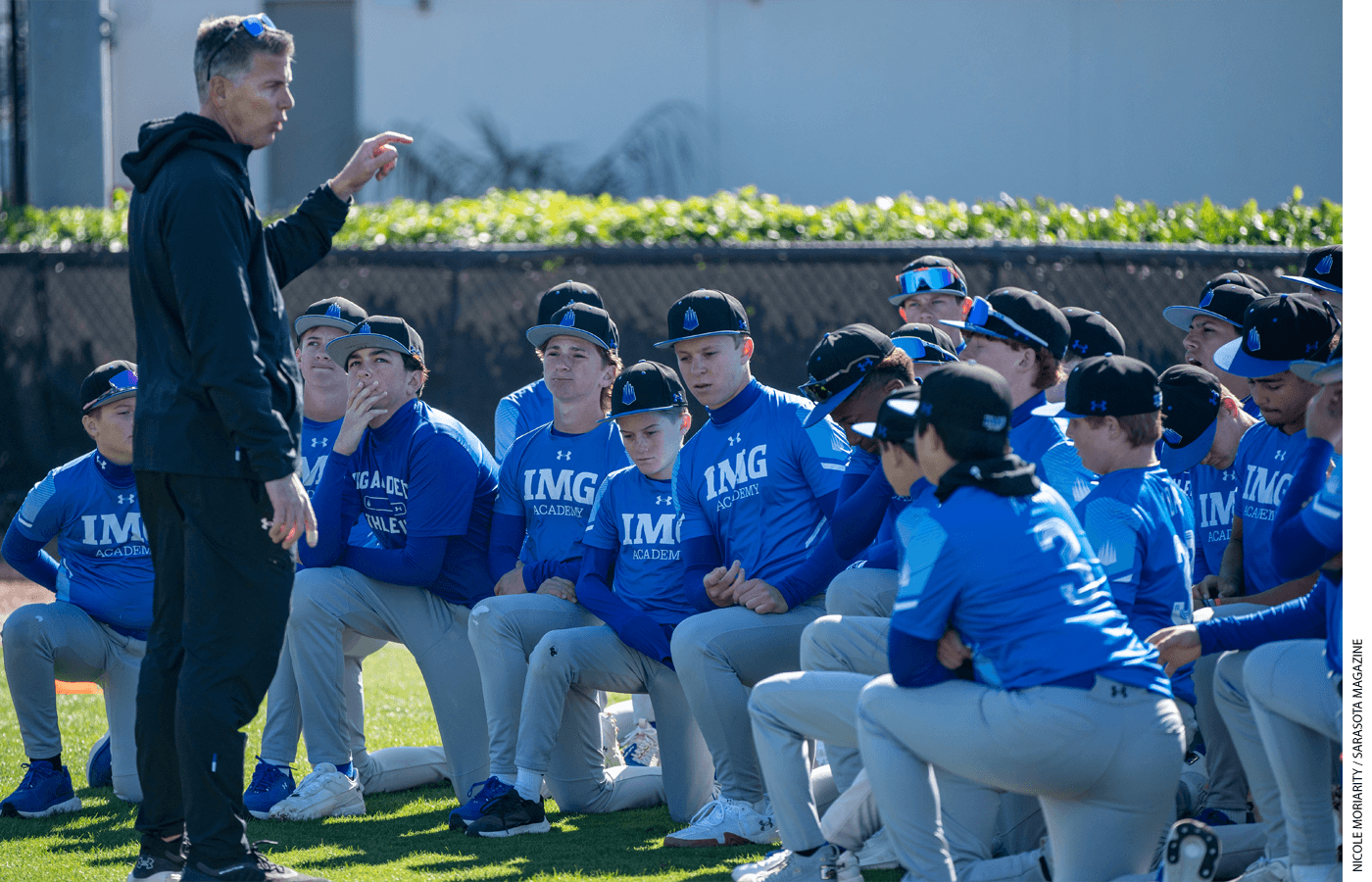
Imagine a chilly Florida morning. While most middle schoolers are deciphering algebraic equations, a group of 7th and 8th graders at a prominent sports academy are on a baseball field, cleats digging into the turf. Their "classroom" is a baseball diamond, and their lesson today, led by the head of leadership and character development, revolves around communication and teamwork.
Through drills like "blind dodgeball" and a challenging cone maze, these young athletes are learning invaluable life skills. One student is blindfolded, relying entirely on his partner's verbal cues to navigate a hazard. Nearby, another group studies each other's mistakes in a complex drill, absorbing lessons from observation.
"You're giving signals to your teammates all the time," explains the coach, a former professional baseball player with a doctorate in character education. He highlights how a player's frustration after a strikeout can lead to isolation, a stark contrast to the collaborative spirit IMG Academy aims to instill. "You think it's all about you. But you just saw eight pitches. You have a lot of information to share."
The message is clear: success in sports, and in life, is rarely a solo endeavor. College coaches, he emphasizes, are not just watching for athletic talent; they are keenly observing how students interact, communicate, and support their peers. This integrated approach to character development, encompassing leadership, mental fortitude, and well-being, is a cornerstone of the modern sports academy model.
Elite Training, Academic Excellence: A Dual Pursuit
Miles away from the baseball diamond, another group of students is engaged in a different kind of intense training. Over a hundred high school and middle school football players are honing their skills, their movements precise under the guidance of former NFL veterans. Among them is a highly-touted quarterback, already ranked among the nation's best for his graduating class.
This young athlete, who left his home state to attend the academy, believes it offers him the optimal environment to reach his full potential. Equipped with wearable technology that tracks his performance, he's not just developing his physical game; he's learning self-care and gaining a maturity that he feels has already prepared him for the rigors of college-level competition.
At these elite academies, the sheer concentration of talent can be astonishing. Athletes who would be undisputed stars at their hometown schools often find themselves among peers of similar or even greater caliber. This environment fosters a unique dynamic, where individual achievement is recognized, but the collective pursuit of excellence takes center stage.
While the fields and courts buzz with athletic activity, the academic centers are equally vibrant. In a law class, students engage in a mock trial, their arguments as sharp and competitive as any athletic contest. The energy is palpable, with classmates actively participating, questioning, and offering support – mirroring the dynamic of a cheering crowd.
These institutions often boast impressive student-teacher ratios and a significant number of students enrolled in advanced placement courses. A visual representation of their success is often found in hallways adorned with maps tracking the destinations of graduating seniors, a testament to the primary goal for most: securing a place in higher education.
The Evolving Landscape: From Niche Programs to National Presence
The concept of sports academies is not entirely new, with some, like the renowned tennis academy founded in the late 1970s, having a long and storied history. However, the model has undergone a significant transformation, expanding to encompass a vast array of sports and attracting a diverse student body.
The growth of these academies is fueled by a confluence of factors. Parents are increasingly recognizing the profound life skills that sports can impart – discipline, resilience, strategic thinking, and effective collaboration. These are seen not as mere extracurricular activities, but as integral components of a well-rounded education.
The financial investment in attending such academies can be substantial, with tuition often reflecting the high-level facilities, coaching, and specialized academic support provided. However, for many families, this cost is weighed against the potential for college scholarships, future athletic opportunities, and the unique educational environment that these schools offer. Many academies also provide significant scholarship and financial aid to ensure accessibility.
Internationally, the appeal of these academies is also growing, with a notable percentage of students coming from abroad, drawn by the promise of world-class training and education. This global reach underscores the universal desire for a comprehensive development model that nurtures both academic and athletic potential.
Navigating the Spectrum: Quality, Opportunity, and Caution
The burgeoning market for sports academies has, inevitably, attracted a wide range of operators, leading to a significant variation in quality and integrity. While some institutions stand as paragons of excellence, others operate with questionable academic standards or even fraudulent intent.
The stark contrast between elite academies and less reputable operations was dramatically highlighted by a widely publicized football game. On one side stood a nationally recognized academy, showcasing its state-of-the-art facilities and highly skilled athletes. On the other was a school that, upon investigation, was found to have virtually no academic program, existing primarily as a facade for athletic pursuits.
This incident served as a wake-up call, exposing the vulnerabilities within the system and raising critical questions about oversight and accountability. Investigations revealed a pattern of negligence and deception, where aspiring student-athletes were promised opportunities that never materialized, often living in precarious conditions with minimal educational support.
The fallout from such cases underscores the importance of due diligence for families considering these specialized schools. While the allure of professional sports careers or significant college scholarships is powerful, it is crucial to scrutinize the academic rigor, the credentials of the staff, and the overall operational integrity of any academy.
Regulatory bodies and athletic associations are actively working to establish clearer guidelines and standards for these institutions. The NCAA, for instance, maintains a registry of accredited high schools to ensure that student-athletes meet academic eligibility requirements for college play. However, the decentralized nature of some educational models, particularly those operating outside traditional charter systems, presents ongoing challenges in oversight.
The Holistic Advantage: Beyond the Game Plan
At the heart of the most successful sports academies lies a profound understanding that athletic success is inextricably linked to overall well-being and personal development. These institutions are increasingly incorporating sophisticated programs focused on mental conditioning, sports psychology, and holistic health.
Mental performance coaches work with student-athletes to develop strategies for focus, resilience, and managing pressure. Techniques such as visualization, mindfulness, and controlled breathing are taught not as optional extras, but as essential tools for peak performance, applicable to both athletic competitions and academic challenges.
The philosophy is often articulated as "you don't have to be sick to get better." This proactive approach aims to equip students with the mental fortitude to navigate the inevitable ups and downs of competitive life, fostering a mindset that is adaptable, confident, and self-aware.
These comprehensive support systems extend to physical conditioning, nutrition, and injury prevention, creating an environment where student-athletes are nurtured as whole individuals. The skills honed in these areas – discipline, goal-setting, and effective time management – are directly transferable to academic pursuits and future careers.
A New Paradigm for Learning and Development
The rise of sports academies represents a significant evolution in the educational landscape. These institutions are demonstrating that a deeply integrated approach to academics and athletics can foster not only exceptional athletes but also well-rounded, capable individuals prepared for a complex world.
While challenges remain in ensuring consistent quality and accessibility, the core principles of sports academies – fostering discipline, promoting holistic development, and instilling a strong work ethic – offer a compelling model for the future of education. As these academies continue to innovate and expand, they are poised to play an even more influential role in shaping the next generation of leaders, thinkers, and doers.







 Explore AI Teaching Tools
Comments (0)
Please login to comment
No comments yet
Be the first to comment on this article