
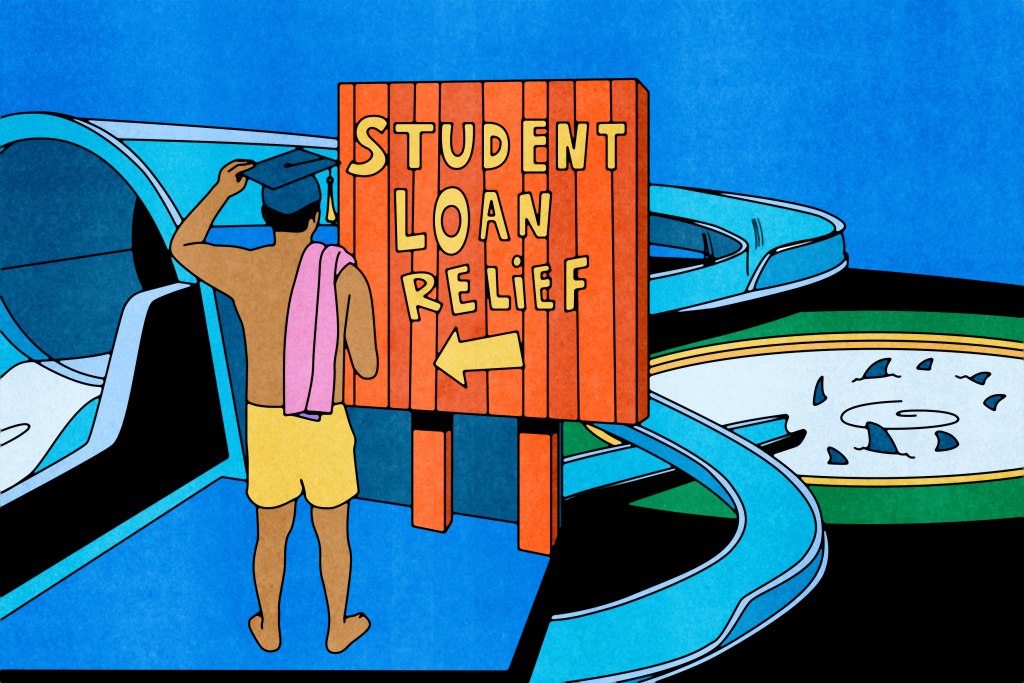
Student Loan Scammers Exploit Federal Policy Shifts, Leaving Borrowers Vulnerable
A teacher in Wisconsin, burdened by over $60,000 in student loan debt a decade after graduation, recently received a tempting offer over the phone: 80 percent of her federal student loans forgiven, for a fee. The caller, representing a company with "federal" in its name, promised a solution, but abruptly ended the conversation when pressed for details. This teacher, who receives similar calls weekly, is just one of millions of Americans grappling with student loan obligations and increasingly targeted by fraudulent debt relief schemes.
A Shifting Landscape for Student Loan Borrowers
The landscape of student loan repayment has become increasingly complex, creating fertile ground for scams. A long period of paused payments during the pandemic has ended, with repayment resuming and the government restarting collections on defaulted loans. Compounding this, a recent federal court ruling effectively dismantled a key income-driven repayment program, leaving many borrowers uncertain about their options.
This period of flux and confusion is precisely what predatory companies exploit. Experts note that changes within the student loan system, coupled with reduced oversight from the federal government, create a prime opportunity for these firms to capitalize on borrowers' anxieties and lack of clear information.
The Rise of Deceptive Debt Relief Companies
Investigations have uncovered dozens of companies actively promising student loan forgiveness. Many of these operations charge substantial fees for services that borrowers could easily perform themselves, such as filling out readily available government paperwork. The promise of erasing debt, especially for those struggling with significant loan balances, is a powerful lure.
These scams are not new, having evaded regulatory efforts for years. However, periods of significant change within the federal student loan program invariably see an uptick in their activity. The current environment, marked by shifting repayment rules and diminished enforcement, is no exception.
When Servicers Fail, Scammers Thrive
A significant factor contributing to the market for debt relief scams is the perceived inadequacy of the actual student loan servicers. These companies, often contracted by the federal government, are frequently criticized for understaffing, poor customer service, and difficulty in reaching them. This leaves borrowers struggling to obtain clear answers about their repayment options.
Furthermore, cuts to the Department of Education have reduced the staff available to oversee these servicers. The recent announcement of shifting oversight of loan servicing and collection to the Department of the Treasury has only added to the potential for confusion among borrowers.
Reduced Enforcement Fuels Fraudulent Operations
Under the current administration, there has been a notable scaling back of efforts to combat student loan scammers. A memo from a key consumer protection agency indicated a deprioritization of enforcement actions against these fraudulent companies. This reduction in oversight and enforcement creates a more permissive environment for scams to flourish.
The agency in question has historically been instrumental in recovering billions of dollars for consumers, including those targeted by student loan scams. Its diminished focus on this area is a significant concern for consumer advocates.
The Servicer's Perspective and Borrower Confusion
Representatives from the student loan servicing industry argue that they are doing their best with the resources provided by the government. They contend that negative portrayals by consumer advocacy groups can discourage borrowers from engaging with them, pushing them instead towards companies that offer unrealistic promises.
This dynamic creates a cycle where borrowers, feeling unheard or unsupported by their official loan servicers, may turn to less reputable sources that promise quick and easy solutions. The perception of "unicorns and rainbows" offered by scammers can be more appealing than navigating complex, often opaque, federal programs.
Government Efforts to Improve Information Access
In response to concerns about borrower confusion, the Department of Education has stated that it is increasing the availability of information and tools for borrowers. These efforts include enhanced data assessments and performance reporting from loan servicers, aimed at improving customer service and oversight.
However, many advocates for student loan borrowers remain unconvinced, arguing that the administration has not adequately addressed the struggles of those burdened by student debt. They emphasize that this is an issue that transcends political divides, affecting individuals across the country.
The Devastating Impact of Falling for Scams
For borrowers who fall victim to these scams, the financial consequences can be severe, often leading to a worse financial situation than before. A common scam involves charging an upfront fee and then enrolling borrowers in automatic monthly payments, which are not actual loan payments but rather fees collected by the scammer.
Scammers often request borrowers' login information for their loan servicers. They then place the loans into forbearance, temporarily pausing payments while interest continues to accrue. Crucially, they alter settings so that borrowers no longer receive communications about their loan status. When payments resume, the borrower is often unaware, leading to missed payments and eventual default.
The Perils of Defaulting on Federal Loans
Defaulting on federal student loans carries significant penalties. The full weight of the federal government can be brought to bear for collection, including wage garnishment without a court order, reduction of government benefits, and denial of security clearances. Unlike many other forms of debt, there is no statute of limitations on federal student loan debt, meaning it can have lifelong consequences.
Scams Flourish Amidst Rising Delinquency
The proliferation of these scams coincides with a concerning rise in student loan delinquency. Millions of borrowers are now in default, many of whom have not made payments for years due to the pandemic pause. This creates a desperate environment where individuals are actively seeking solutions, making them more susceptible to fraudulent offers.
Many of these loan forgiveness schemes are outright illegal, particularly when companies misrepresent their affiliation with the government. While federal agencies can impose fines and even prison sentences for such fraud, the sheer volume of scams makes comprehensive enforcement a significant challenge.
Examples of Deceptive Practices
Investigations have revealed companies using deceptive tactics, such as alluding to fictitious government programs or using names that mimic official agencies. One company, for instance, promoted an "American Student Loan Forgiveness Program," which does not exist as a federal initiative. Their website even featured graphics suggesting government endorsement.
Another common tactic involves leveraging misinformation circulating on social media. Viral posts sometimes wrongly suggest that borrowers can have their loans forgiven due to alleged government data breaches, further confusing borrowers about their actual options and rights.
The Role of Technology in Amplifying Scams
The increasing sophistication of technology, including AI-powered voice agents, allows scammers to reach a wider audience more efficiently. This makes it easier than ever for fraudulent operations to contact potential victims and deliver convincing, albeit false, promises.
Even popular AI tools have been found to provide inaccurate information about student loans, adding another layer of confusion for borrowers trying to navigate the system. Predatory companies often use aggressive sales tactics, impersonating government officials to create a sense of urgency and eligibility for non-existent programs.
Document Preparation Services: A Gray Area
Beyond outright scams, there are also companies that offer document preparation services for student loan repayment programs. While these services may not be illegal, experts suggest they offer little benefit, as the application processes for most federal programs are straightforward and can be completed by borrowers themselves.
These companies often charge substantial fees for services that essentially involve filling out forms that borrowers could easily manage. This raises questions about their value proposition, especially when compared to the readily available free resources for student loan borrowers.
The Path Forward: Education and Enforcement
Consumer education is a critical component in combating these scams. Raising awareness about the existence of free resources, such as state ombudsman offices, can empower borrowers to seek legitimate assistance. The goal is to equip individuals with the knowledge that they do not need to pay for help with their federal student loans.
However, experts also stress the paramount importance of vigorous enforcement by state and federal governments. As technology advances and scammers become more sophisticated, a proactive and robust approach to prosecuting fraudulent operations is essential to protect vulnerable student loan borrowers.






 Explore AI Teaching Tools
Comments (0)
Please login to comment
No comments yet
Be the first to comment on this article