
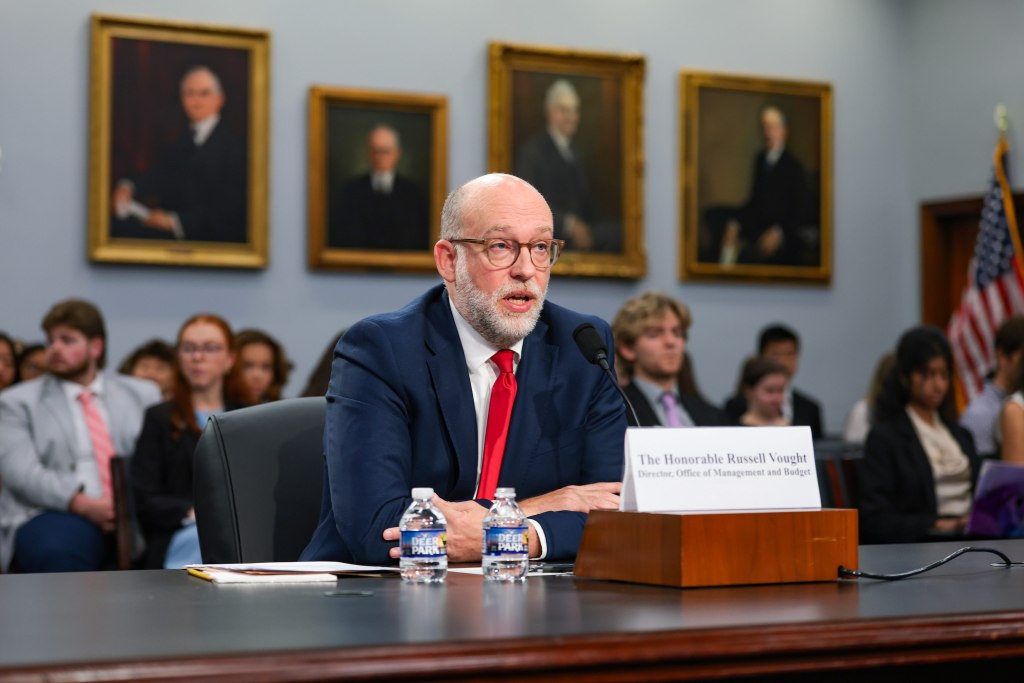
Federal Grant Overhaul Sparks Fears of Politicized Education Science
A sweeping proposed overhaul of federal grant regulations is igniting alarm bells within the education research community. Critics warn that the changes, particularly the introduction of political review for funding decisions, could fundamentally alter the landscape of academic inquiry, potentially stifling crucial investigations into student learning and equity.
Shifting Sands of Scientific Inquiry
The bedrock of influential movements like the "science of reading" was meticulously constructed over decades. This vital body of knowledge emerged from federally supported research, drawing insights from cognitive science, neuroscience, psychology, linguistics, and extensive classroom studies. Now, a proposed 100-page revision to federal grant rules, which includes a new layer of review by political appointees, threatens to impede the creation of similar foundational evidence.
The Office of Management and Budget (OMB) asserts that these proposed changes are designed to bolster accountability, transparency, and oversight for taxpayer-funded grants. The May 29 proposal aims to revamp the procedures for awarding and managing grants, impacting major funding sources for education research such as the Department of Education and the National Science Foundation. OMB has indicated a target effective date of October 1 for the final rule.
However, in formal comments submitted to the OMB by the July 13 deadline, prominent education research organizations voiced significant concerns. They argued that certain provisions could inadvertently produce detrimental consequences. These include narrowing the scope of questions researchers are able to investigate, injecting undue political influence into funding decisions, and disrupting ongoing research projects.
The collective plea from these organizations is not merely for amendments but for the complete withdrawal of the proposed overhaul. Specific objections related to education research were detailed in separate letters from the National Academy of Education, co-signed by 19 other education and science organizations; the American Educational Research Association (AERA); and the Knowledge Alliance, an organization representing approximately 20 entities engaged in education research.
The Peril of Prohibiting Inquiry into Disparities
One of the most significant anxieties expressed by education researchers centers on studies that examine differential outcomes among student populations. The proposed rule includes language that would prohibit federal funds from supporting research connected to what the administration terms "unlawful diversity, equity, and inclusion" activities.
Furthermore, it would restrict funding for what are known as "disparate impact studies." These critical analyses investigate whether policies that appear neutral on their face may nonetheless yield different results for various demographic groups. The National Academy of Education, in its letter joined by 19 other science and education organizations, cautioned that such a rule could effectively ban studies exploring racial or ethnic achievement gaps.
It could also prevent research into whether specific educational interventions benefit certain students more than others. "Whether a reading intervention works differently for English language learners, whether a discipline policy falls more heavily on students of color, whether a gifted education program under-identifies students with disabilities — these are not fringe questions," the organization stated in its submission. "They are central empirical questions of education policy research."
Researchers also highlighted potential conflicts with existing federal education laws and programs that mandate demographic analysis. For instance, Title I, a federal program supporting schools with high concentrations of poverty, allocates roughly $17 billion annually. This program requires states and districts to scrutinize student outcomes by race, disability status, income, and English learner status to identify and support struggling student groups.
While the proposed rule does not explicitly forbid all such analyses, researchers contend that the language surrounding diversity, equity, and inclusion, and "disparate impact," is sufficiently broad and ambiguous. This vagueness, they argue, could foster uncertainty and discourage researchers from proposing vital studies that address these complex issues.
Who Holds the Reins of Research Value?
Beyond the implications for specific research topics, education researchers are also objecting to proposed changes that would significantly increase political involvement in grant decision-making. The proposal mandates that agencies consider alignment with federal priorities, which are inherently subject to change with each new administration, and the undefined concept of "national interest."
Crucially, the proposal states that political appointees will be tasked with reviewing all grants before they are issued. Research organizations argue that this requirement could diminish the role of independent scientific review, a process where subject matter experts rigorously evaluate proposals based on their quality, scientific rigor, and feasibility.
Researchers express further concern that the administration's emphasis on "gold standard science," a term that remains undefined, could inadvertently favor certain research methodologies over others. Education research, unlike the straightforward testing of a new pharmaceutical, often employs a diverse array of approaches. These can include extensive surveys, in-depth interviews, and sophisticated data analysis techniques that aim to replicate experimental conditions without the ability to randomly assign students to specific programs or instructional styles.
Among other proposed alterations, the OMB plan calls for agencies to prioritize grant proposals with lower overhead costs. This provision, critics argue, could disadvantage larger research universities that often incur higher administrative expenses. The proposal also suggests reducing federal funding for conference attendance and publication costs, unless explicitly justified and approved.
Under the new framework, researchers would be compelled to provide written justifications for each request for grant funds, thereby increasing their administrative burden and paperwork. Education research organizations have voiced opposition to all of these proposed changes.
The Long Game of Scientific Discovery
The White House proposal places a strong emphasis on supporting research that can yield immediate results or lead to breakthrough innovations. In response, the Knowledge Alliance highlighted the "science of reading" as a prime example of why genuine progress often necessitates patience and sustained investigation.
"Researchers would be less likely to pursue important long-term questions that are critical to creating the foundational knowledge needed for scientific breakthroughs," wrote Rachel Dinkes, president of the Knowledge Alliance. She further elaborated that the science of reading "reflects the accumulation of evidence over many years and across multiple administrations, which has been pivotal to improving student outcomes in reading."
When the Research Pipeline Runs Dry
Education research groups have also raised serious concerns about the potential consequences of suspending or terminating grants once studies have already commenced. The National Academy of Education issued a stark warning that such interruptions could be particularly devastating for longitudinal studies, which inherently rely on consistent data collection over extended periods.
Losing even a single year of data collection, the organization argued, could irreparably damage a study's scientific value and its ability to yield meaningful conclusions. Researchers also pointed to the ripple effects that could extend beyond university walls. Federal research grants frequently support vital partnerships between researchers and schools, fund professional development opportunities for educators, and finance interventions directly benefiting students.
The memory of abrupt grant terminations is still fresh in the minds of many in the education research field. For example, when the Department of Education terminated dozens of research studies in a previous instance, approximately 1,600 high school students with disabilities lost access to essential services.
Restrictions on international research collaborations also emerged as a significant point of contention. Researchers argued that broad limitations on foreign partnerships could impede U.S. participation in crucial international assessments such as PISA and TIMSS. These assessments are vital for policymakers seeking to compare the academic performance of U.S. students with that of their counterparts in other nations.
The OMB's proposal to overhaul the federal government's grant awarding and oversight processes is encountering robust opposition from scientific societies and research organizations across a wide spectrum of disciplines, from medicine to climate science. The objections from the education research community represent just three among a staggering 496,775 public comments submitted.
A recent analysis noted that research organizations strategically submitted a high volume of comments, aiming to either decelerate the rule-making process or establish a comprehensive administrative record that could potentially be used in future legal challenges to contest the rule. The OMB has not yet responded to specific inquiries regarding the objections raised by education researchers.






 Explore AI Teaching Tools
Comments (0)
Please login to comment
No comments yet
Be the first to comment on this article