
Clermont's Business Incubator: Forging Adaptable Leaders in a World of Shifting Sands
In an era where career trajectories are rarely linear, a new generation of business professionals is emerging from Clermont, armed not just with knowledge, but with an inherent capacity for adjustment. Meriem Djehiche, now a Master in Management student, learned this lesson early, realizing that the path to professional success is often a winding one, paved with diverse experiences.
Her journey began in Algeria, a continent away from her current academic pursuits. Seven years ago, Meriem arrived in France, driven by an insatiable curiosity about how economies function on an international stage. Her early academic background in economics and social sciences had ignited a fascination with the underlying systems that govern global commerce.
When the time came to select a business school, Clermont School of Business (then known as ESC Clermont) presented a compelling option. Its three-year Bachelor in International Management, accredited by EFMD, perfectly aligned with her burgeoning interest in cross-border business dynamics. This program became a clear and attractive choice for her undergraduate studies.
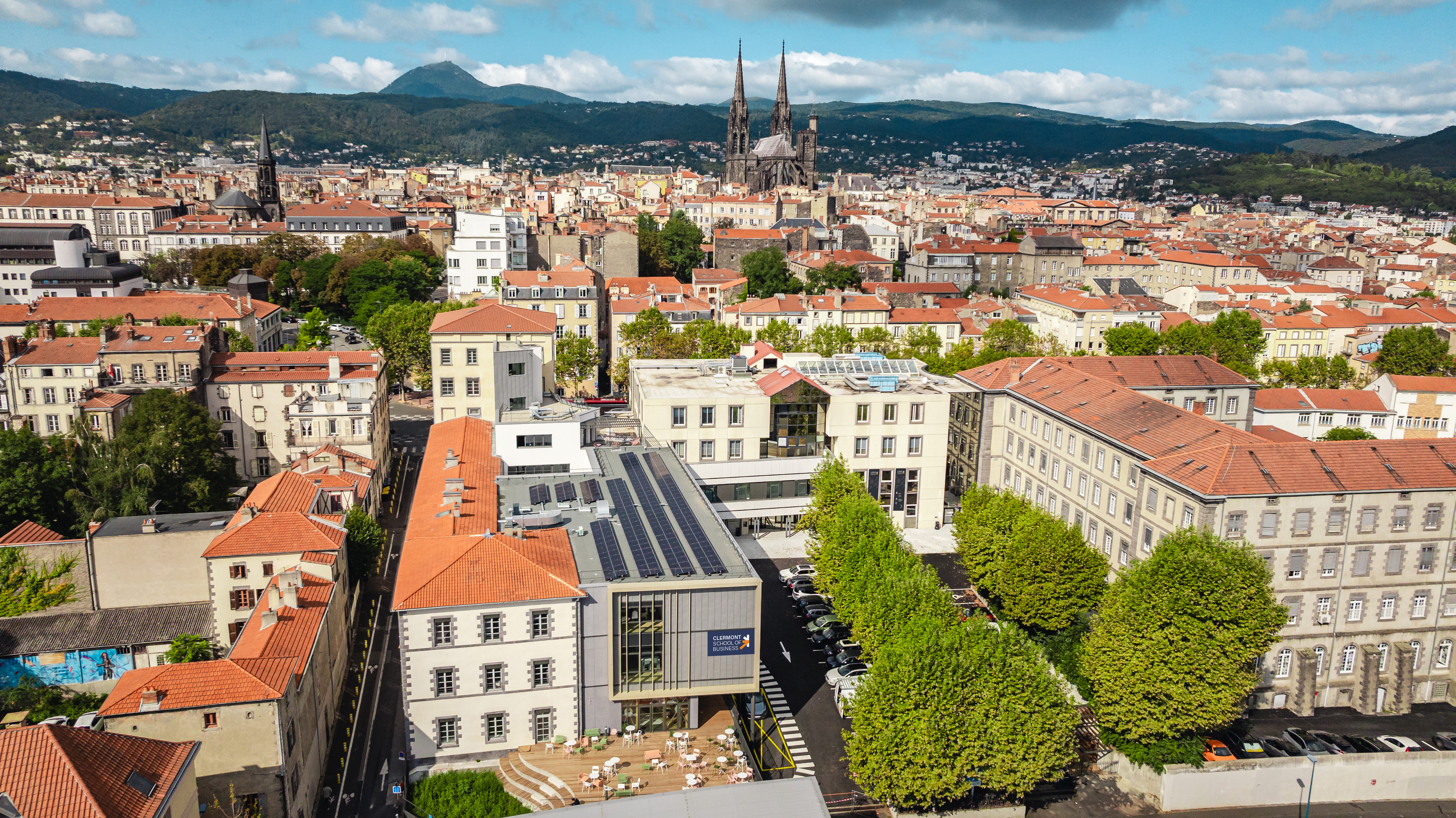
Founded in 1919, Clermont School of Business embodies the rich tradition of French management education while simultaneously operating on a truly international scale. The institution boasts three prestigious international accreditations: AACSB, AMBA, and EFMD Bachelor. It consistently ranks among the Financial Times Top 100 European Business Schools, nurturing a vibrant student body of approximately 2,000 individuals, with a significant one-third hailing from international backgrounds.
“So I decided to shoot my shot,” Meriem recalls with a smile, reflecting on her decision to apply. “And here I am today.” Now 21, Meriem is in the midst of her master’s studies, having seamlessly transitioned from the Bachelor in International Management directly into the AMBA-accredited Master in Management (Grande Ecole Programme).
Looking back, what truly stands out for Meriem is the gradual yet profound accumulation of perspective. Each experience, she notes, has served as a stepping stone, building upon the last to create a holistic understanding of the business world. The school's 15,000 m² campus, situated in the heart of Clermont, provides an energetic and stimulating environment conducive to learning and growth.
A Foundation Built for Exploration and Understanding
Meriem describes her undergraduate experience at Clermont SB as providing a "wide range of knowledge when it comes to the business industry — like a 360° vision of it all." The curriculum was meticulously designed to offer a comprehensive overview of how organizations function, spanning critical areas such as accounting, logistics, law, marketing, and multicultural management.
This broad framework began to fundamentally shape her perception of the world beyond the classroom. She found herself dissecting everyday commercial activities with a newfound analytical lens, paying closer attention to product positioning strategies and the construction of marketing campaigns. She began to scrutinize the underlying assumptions that informed these initiatives.
“To a large extent, it changed my perspective on everyday life,” she explains. “I would look at products differently, I would judge campaigns based on what I learned, and I’d be able to innovate and come up with new perspectives.” This intellectual shift was not confined to theoretical contemplation; it translated directly into practical application.
During her bachelor’s studies, Meriem actively sought practical experience through internships in the banking sector, later transitioning to a work-study apprenticeship. This progression was not an abrupt shift from theory to practice, but rather a testament to how coursework and professional engagement at Clermont SB were intentionally structured to be mutually reinforcing.
Roshni Thirunavukkarasu’s experience with the Bachelor in International Management program mirrors this balanced approach. Originally from Chennai and raised in Qatar, Roshni harbored a clear vision for her future career path from an early age. She recognized the value of a broad foundation before specializing.
“While there were options to specialize in areas like international marketing or finance, I chose to continue with management because it aligned better with my long-term plans,” she states. For Roshni, the priority was not premature specialization, but rather a thorough understanding of the entire business landscape.
The program's structure was instrumental in supporting this objective. All students, irrespective of their eventual career aspirations, were first exposed to fundamental disciplines before being prompted to commit to a specific area of focus. Several courses left a particularly indelible mark on her academic journey.
Illuminating Courses and Global Immersion
Professor David Martini’s Contract Law course, for instance, demystified legal reasoning through a structured and clear approach. He masterfully broke down complex, unfamiliar material into manageable components, emphasizing comprehension over rote memorization. This made the subject accessible and practical.
In Professor Isaac Awuye’s finance classes, intricate concepts were rendered comprehensible through insightful explanations rather than abstract jargon. This pedagogical approach ensured that students grasped the core principles of finance, regardless of their prior exposure to the subject.
International Management sessions, led by Dr. Helga Foure-Joopen, were frequently enriched by compelling narratives and engaging discussions. These classes utilized real-world examples of cultural differences to firmly anchor theoretical concepts, making them relatable and memorable.
These distinctions became even more pronounced during Roshni’s semester abroad in Germany. This international experience was a deliberate choice to immerse herself in a different academic system and explore subjects not readily available at her home institution. The experience proved invaluable.
“The experience helped me expand my network, gain international exposure, and develop adaptability,” she shares, highlighting the multifaceted benefits of her time abroad. This period of international study was a crucial component in her development as a globally-minded business professional.
From Generalist to Specialist: A Strategic Evolution
As a third-year student, Roshni is now confidently looking towards the next phase of her career. She feels well-prepared to enter entry-level positions across various sectors.
“I feel confident entering entry-level roles in management, business, or marketing,” she states. Her immediate plan is to gain practical work experience after completing her bachelor’s degree. This hands-on experience will then inform her decision about whether further academic pursuits are necessary, and in what form they might take.
Clermont School of Business actively encourages and supports a diverse range of future plans for its graduates. The institution views the transition from a bachelor’s to a master’s degree not as a radical shift in direction, but rather as a deepening of focus and expertise.
“If the bachelor’s gave a global view, the master’s was like looking into a niche and more technical part of marketing,” Meriem elaborates. Her master’s program propelled her beyond the surface-level creativity of marketing into its operational core, focusing on performance analysis, system understanding, and strategic execution.
She points to certain courses within the master’s program as being particularly transformative. “Law and crisis management were so eye-opening,” she asserts. “I can state with confidence that I have learned and developed skills that cannot be taught anywhere else.” These specialized modules provided her with unique and invaluable professional competencies.
The Master in Management program also provided Meriem with the opportunity to specialize in digital marketing, a field she found to be immediately relevant to current market demands. This specialization was crucial for her professional development.
“I learned SEO, website optimisation, digital analysis,” she explains. “This knowledge was truly useful to develop and sharpen my skills.” This practical, in-demand skillset directly prepared her for the evolving digital landscape of business.
Beginning in September 2026, graduates of the Master in Management program will receive a dual qualification. This includes the Programme Grande École diploma, officially awarded by the French Ministry of Higher Education, Research and Space, alongside a Specialist Institutional Master’s degree in their chosen field of specialization. This dual credential offers enhanced marketability.
After completing a foundational set of core management modules, students select one of eight distinct professional tracks during their first year. The second year is dedicated to an advanced specialization, meticulously designed to refine their profiles in direct alignment with current business needs and industry demands.
For Meriem, the inherent flexibility within her academic journey has undeniably fostered a greater sense of versatility. As she contemplates her future, she is actively weighing multiple pathways, including entering the workforce or pursuing further studies through a specialized Master of Science program.
At Clermont School of Business, this commitment to openness and adaptability is deeply embedded within the educational system. Academic pathways are intentionally designed to remain fluid and accessible, ensuring that clarity and direction emerge from practical experience, rather than preceding it.
The ultimate outcome? A new generation of business leaders who are empowered to pursue their chosen paths with confidence, equipped with the skills and adaptability to thrive in an ever-changing global marketplace. They are ready to make their own decisions, on their own terms, once they have the experience to guide them.






 Explore AI Teaching Tools
Comments (0)
Please login to comment
No comments yet
Be the first to comment on this article