
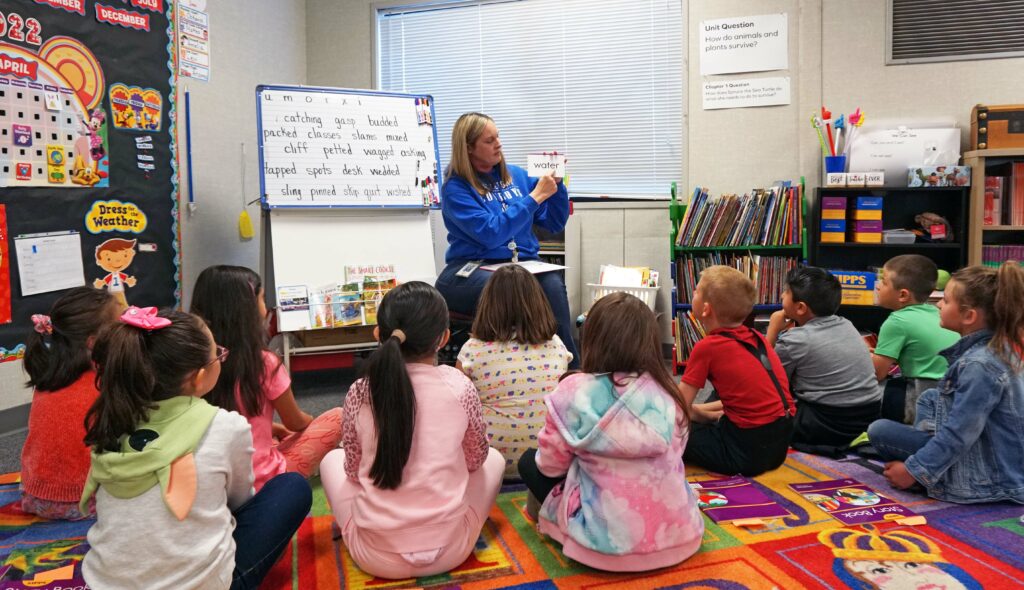
Unlocking Early Literacy: How Early Screening Empowers California Students to Read
In the journey of education, the ability to read is a cornerstone, opening doors to knowledge and future success.For educators and parents alike, ensuring that every child develops strong reading skills is paramount.
This is particularly true in California, where innovative approaches are being implemented to identify and support young learners at risk of reading challenges.
This article delves into the critical role of early screening in fostering literacy, exploring how these assessments are transforming the educational landscape for students from kindergarten through second grade, and what they mean for the future of English language learners.
The Imperative of Early Identification: Catching Reading Challenges Sooner
The foundational years of a child's education are crucial for developing essential reading skills.Research consistently shows that early intervention can significantly alter a student's trajectory, preventing minor difficulties from becoming substantial barriers to learning.
This is why California schools are embracing new screening tools designed to pinpoint potential reading struggles before they become ingrained.
These assessments go beyond a simple check-up; they are designed to provide a nuanced understanding of a child's readiness for reading.
What Do Early Reading Screeners Measure?
These vital tools evaluate a range of skills that are predictive of reading success.Educators are diligently learning to administer these tests, focusing on key areas: * **Phonological Awareness:** This involves understanding the sound structure of language.
Students are assessed on their ability to recognize and manipulate sounds in spoken words, such as identifying rhyming words or breaking down words into individual sounds. * **Letter Knowledge:** A fundamental skill is knowing the alphabet, including the names of letters and the sounds they represent.
This forms the building blocks for decoding words. * **Vocabulary Development:** A rich vocabulary is essential for comprehension.
Screeners often gauge a student's understanding of a wide range of words. * **Rapid Automatized Naming (RAN):** This measures how quickly and accurately a student can name familiar objects, colors, or letters presented in a sequence.
Efficient RAN is linked to fluent reading. * **Decoding and Encoding Skills:** For older students in the early grades, screeners may assess their ability to sound out words (decoding) and spell simple words (encoding).
These comprehensive evaluations are designed to be brief, typically taking no more than ten minutes per child, ensuring minimal disruption to instructional time.
The goal is not to diagnose, but to identify areas where a student might need additional support.
Navigating the Landscape of California's Literacy Initiatives
California is at the forefront of a significant push to enhance literacy rates, with early screening forming a crucial part of a broader, albeit evolving, state-wide strategy.This initiative is not happening in isolation; it is intertwined with changes in how reading is taught and how teachers are prepared to deliver effective instruction.
The ultimate aim is to ensure that a greater number of California children are reading proficiently by the third grade, a critical benchmark for future academic success.
The Role of Technology and Diverse Representation in Screening Tools
Developing effective screening tools requires careful consideration of the diverse student population in California.One notable screening program, developed by researchers at a leading university's Dyslexia Center, exemplifies this commitment.
This program utilizes engaging, age-appropriate interfaces, often featuring animated characters that are culturally and geographically relevant to California.
This thoughtful design aims to minimize potential biases and ensure that the screening experience is accurate and equitable for all children.
The development process itself is rigorous, involving extensive research and testing with thousands of California children.
This ensures that the screening tasks are age-appropriate and effectively measure the targeted literacy skills.
For instance, kindergarteners might be asked to identify letters and understand how changing a part of a word alters its meaning, often through interactive picture-based tasks.
First graders might focus on letter sounds and word recognition, while second graders build upon these skills with word reading and spelling.
Instantaneous Feedback for Timely Intervention
A significant advantage of these modern screening tools is the speed at which results are delivered.Within seconds of a student completing the assessment, educators receive immediate data highlighting specific areas where the child may need extra support.
This rapid feedback loop is transformative.
It allows teachers and administrators to: * **Identify students at risk early:** This is crucial for implementing timely interventions. * **Tailor instruction:** The data provides insights into specific skill deficits, enabling teachers to personalize their teaching strategies. * **Inform parent communication:** Educators can share specific, data-driven insights with parents about their child's progress and areas for focus. * **Analyze class-wide trends:** Beyond individual students, the data can reveal patterns within a classroom or grade level, informing broader instructional planning.
This immediate access to information contrasts sharply with older methods where data might not be available until much later, delaying crucial support.
The ability to conduct screenings across multiple grade levels simultaneously and earlier in the academic year empowers educators to provide targeted interventions when they are most effective.
Addressing the Needs of Multilingual Learners: A Complex but Crucial Aspect
A significant consideration in California's literacy efforts is the diverse linguistic background of its students.The state is home to children who speak over 100 different languages at home.
Ensuring that early screening accurately reflects their literacy development, particularly for English learners, presents a unique set of challenges and opportunities.
Screening in Multiple Languages: The English and Spanish Advantage
Recognizing that proficiency in English is a developing skill for many students, the law mandates that if a student is not sufficiently proficient in English, they must be assessed in their primary language.Several of the recommended screening tools are available in both English and Spanish.
For students who speak Spanish at home, experts often recommend assessment in both languages.
This dual-language approach provides a more comprehensive picture of their developing literacy skills, as they may possess different strengths in each language.
This approach allows educators to identify foundational skills that may be present in a student's home language, providing a valuable starting point for building English literacy.
It moves beyond simply noting a lack of English proficiency and instead seeks to understand the child's existing linguistic assets.
Navigating Languages Beyond English and Spanish
The reality is that many students speak languages other than English or Spanish.When screening tools are not available in a child's primary language, schools must develop alternative protocols.
This often involves a multi-faceted approach, including: * **Parental consultation:** Engaging with parents to understand the child's linguistic background and development. * **Child observation:** Carefully observing the child's communication and learning behaviors. * **Review of developmental and educational history:** Considering the child's past learning experiences and developmental milestones.
It is critical that screeners are administered in a language where the student has sufficient proficiency.
Administering a screener in English to a student with minimal English knowledge will likely yield results that simply confirm their lack of English proficiency, rather than providing meaningful insight into their potential for reading.
This highlights the importance of careful interpretation and appropriate language selection during the screening process.
Maximizing the Impact of Screening Data: Moving from Identification to Action
The data generated by early reading screeners is a powerful tool, but its true value lies in how it is used.These screenings are not intended to diagnose conditions like dyslexia; rather, they serve as an early warning system, guiding educators toward appropriate support strategies.
Interpreting Results and Planning Next Steps
A common question that arises after screening is: "What happens next?" The data should not immediately lead to pulling students out of class for intensive intervention or special education evaluations.Instead, educators are encouraged to use the screening results as a catalyst for refining their classroom instruction. * **differentiated instruction:** Teachers can adjust their teaching methods within the regular classroom to better meet the needs of students identified as "at risk." This might involve providing more explicit instruction in phonics, offering additional vocabulary building activities, or providing more opportunities for reading practice. * **Targeted Support for English Learners:** For English learners, screening data can inform the integration of English language development strategies alongside literacy instruction.
This ensures that students are developing both their English proficiency and their reading skills concurrently. * **Collaborative Planning:** Educators can use the data to collaborate with literacy specialists and other support staff to develop individualized intervention plans.
It is crucial to communicate to parents that a student being identified as "at risk" for reading difficulties does not predetermine their future.
With the right support and targeted interventions, these students have a strong chance of becoming proficient readers.
The goal is to empower educators with the information they need to provide timely, effective, and individualized support, ensuring that every child has the opportunity to thrive.
Conclusion: Building a Brighter Literacy Future in California
The implementation of early reading screeners across California represents a significant step forward in the state's commitment to improving literacy outcomes for all students.By identifying potential reading challenges at their earliest stages, educators are empowered to provide targeted support, tailored instruction, and timely interventions.
This proactive approach, particularly when mindful of the needs of multilingual learners, promises to unlock the full potential of every child, ensuring that they develop the essential reading skills necessary for lifelong learning and success.
Mentofy is dedicated to supporting educators and learners through innovative educational resources and training, helping to build a future where every student can confidently read, write, and thrive.





 Explore AI Teaching Tools
Comments (0)
Please login to comment
No comments yet
Be the first to comment on this article