
AI in the Classroom: A Double-Edged Sword for Student Futures?
As artificial intelligence rapidly reshapes the job market, a growing number of high school students are finding themselves adrift in a sea of career uncertainty. The very technology poised to revolutionize industries is also creating a complex landscape for young people trying to chart their course, leaving educators and counselors grappling with how best to guide them.
The AI Conundrum: Promise or Peril for Career Guidance?
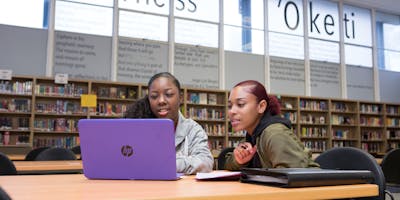
Lily Hatch, a junior at Wake Forest High School, experienced this firsthand. After a career quiz in class suggested dermatology, she turned to a chatbot for college advice. Instead of tailored recommendations for dermatology programs, the AI steered her toward coastal universities based on climate preferences, a tangent she found disorienting.
“I was looking for advice on what colleges would be ideal for me. And it switches into going more into what things in my life I would be looking for in the future, which was not what I was looking for,” Hatch explained. This experience highlights a critical challenge: general AI tools, while powerful, may lack the nuanced understanding required for personalized career counseling.
Matthew Tyson, CEO of Tapestry Public Charter School, observes a pervasive sense of pessimism among his students. Many feel discouraged by the rapid pace of change and the perceived instability of the future labor force. This sentiment is amplified by the looming presence of AI, which is fundamentally altering career trajectories that previous generations relied upon.
“There’s a lot of fear there,” Tyson stated, noting that many students aren't planning for college or feel overwhelmed by the evolving world. Navigating these seismic shifts requires flexibility from both educators and students, demanding transparency about the uncertainties ahead.
The Strained Landscape of School Counseling
The role of a school counselor has always been demanding, but today's challenges are particularly acute. Rising youth unemployment rates and declining college readiness scores paint a stark picture of the support students need. A significant majority of parents express a desire for increased job skills and workforce training opportunities within high school curricula.
Counselors often face an impossible balancing act, torn between providing academic and career advice and addressing students' urgent emotional needs. Many students lack robust support systems, and the emotional toll on counselors can be immense. Tyson likens the situation to a glass that can only hold so much water before overflowing, leading to potential burnout.
Staff shortages further exacerbate the problem. While Tapestry Public Charter School maintains a relatively healthy counselor-to-student ratio of three counselors for 300 students, many other schools struggle. Across Georgia, the ratio stands at 378 students per counselor, far exceeding the American School Counselor Association's recommendation of 250:1. In states like Michigan and Arizona, these figures climb to 573 and 645 students per counselor, respectively.
AI as a Potential Ally for Overburdened Counselors
In the face of these strained resources, schools are increasingly exploring how artificial intelligence can augment the work of human counselors. Proponents argue that AI can amplify the efforts of college and career counselors, freeing them to focus on more complex student needs.
June Han, CEO of EduPolaris AI, believes that AI platforms can offer valuable support. Her company's platform, Eddie, provides portals for counselors, students, and parents, aiming to streamline administrative tasks and provide data-driven insights. The platform is currently being piloted in several Title I high schools.
Tapestry Public Charter School is among those piloting Eddie. Tyson finds the dashboard particularly useful, allowing him to track the progress of college applications, such as the completion of reference letters. This feature helps him identify students who need a nudge, reducing the number of individual meetings required.
The Davidson Institute, a nonprofit supporting gifted students, utilizes Eddie's chatbot function to assist families in its Young Scholars Program. Megan Cannella, director of outreach, highlights the tool's 24/7 availability and multilingual capabilities as key benefits, especially for families new to the college application process or those with non-traditional educational backgrounds.
Shifting Student Aspirations: A New Frontier for Counselors
Beyond the technological challenges, the very nature of what students aspire to achieve after high school is evolving. Geoff Heckman, a school counselor at Platte County High School in northwest Missouri, has observed a growing interest in non-college pathways, including military service and vocational training.
Apprenticeships, internships, and alternative credentials are gaining traction as students seek direct entry into the workforce upon graduation. This skepticism towards traditional college pathways means counselors can no longer assume that route is the default for every student.
Students are increasingly turning to AI and social media for postsecondary guidance, often finding resources independently. Heckman notes significant cultural shifts, with some traditional career paths, like law enforcement, seeing decreased interest, while unconventional careers such as social media influencing and professional gaming are on the rise.
“I want to support a student no matter how wild their dream may sound to me,” Heckman emphasizes. His approach involves helping students research their chosen fields, assess their passion, and seek mentorship. He recounts a success story where a student's aspiration to become a pilot led to the creation of a new internship opportunity with the local Air Guard.
Cultivating Future-Ready Skills
Schools across the country are adapting by building stronger career pathways. Vermont's shift to proficiency-based grading and the incorporation of "self-direction skills" signal a broader educational movement towards preparing students for an unpredictable future.
Ian Trombulak, a school counselor in Vermont, believes this focus on adaptable skills is crucial. He transitioned into counseling after a career in social work, finding fulfillment in guiding students through their formative years. He has witnessed firsthand the increasing demands placed on educators with diminishing resources.
“You know, we're not superheroes,” Trombulak admits. “At a certain point, you are constrained by the kind of resources that you have at your disposal, and public education is not working with a whole lot right now.” He manages a demanding caseload, meeting with five to ten students daily, in addition to numerous informal check-ins.
Trombulak expresses skepticism about AI's ability to fully replace human counselors, suggesting that schools might be turning to AI out of desperation. However, he acknowledges that AI tools, when properly integrated, could potentially amplify the work of human counselors, allowing for more personalized guidance even with limited resources.
The Irreplaceable Human Element in Career Development
Despite the potential of AI, the quality of advice remains paramount. Lily Hatch, after her initial encounter with a general AI chatbot, found the information she received to be superficial and easily obtainable through a simple web search. This experience fueled her skepticism towards AI, leading her to advocate for stronger AI regulations and increased job training opportunities.
Hatch now questions the overreliance on technology in education, observing how students use AI to produce passable schoolwork, sometimes leading to inflated grades. She advocates for a slower, more deliberate approach, suggesting that AI is often overhyped in its utility.
Beyond factual information, many experts argue that the subtler value of human interaction is essential for building the social capital and interpersonal networks crucial for securing future employment. Trombulak emphasizes that his work is largely relational, moving beyond traditional personality tests to engage in open-ended conversations that probe students' passions and aspirations.
“I’m almost there as a mirror,” Trombulak says, describing his role as a sounding board for students exploring their options. He believes a powerful lesson he can impart is teaching students how to find answers for themselves, guiding them through the process of research and verification, which now includes critically evaluating information from AI.
Navigating the Future: A Collaborative Approach
As students stand on the precipice of a rapidly evolving world, the intersection of AI and career counseling presents both opportunities and significant challenges. While AI tools may offer efficiency and data-driven insights, the empathetic guidance and relational support provided by human counselors remain indispensable.
The key lies in finding a balance, leveraging AI to augment the capabilities of educators and counselors, thereby empowering students to navigate the complexities of their future careers with greater confidence and clarity. The ongoing dialogue between educators, students, and technology developers will be crucial in shaping a supportive and effective ecosystem for career development in the years to come.




 Explore AI Teaching Tools
Comments (0)
Please login to comment
No comments yet
Be the first to comment on this article