
CSU's Bold New Mandate: Every Student Guaranteed a Career Path or Grad School Entry
The California State University system is embarking on a transformative journey, pledging to ensure that every student graduates not just with a degree, but with a concrete pathway to a well-paying career or advanced academic pursuits. This ambitious overhaul, dubbed the Student Success Framework, signals a significant shift in how the system defines and delivers on its mission, moving beyond mere graduation rates to encompass post-graduation outcomes.
Redefining Success Beyond the Diploma
For the past decade, CSU campuses have strived to accelerate degree completion and improve graduation rates. While these efforts yielded mixed results, with some institutions seeing dramatic improvements and others lagging, system leaders are now pivoting to a more comprehensive vision. The new framework aims to weave career readiness and graduate school preparedness into the very fabric of the academic experience from day one.
“At orientation, we want students to have a connection between what their career goals are and what their academic plan is,” explained Dilcie D. Perez, vice chancellor for strategic enrollment management and student success. The goal is a more integrated and holistic approach to student development.
By closely aligning academic advising with career counseling, bolstering affordability initiatives, and expanding personalized internship opportunities, the framework intends to equip students with tangible skills. This integration is designed to help students craft an academic plan that directly supports their chosen career and gain practical experience, paving the way for immediate entry into the workforce.
The CSU Board of Trustees officially endorsed this forward-thinking framework, signaling a fundamental reorientation for the entire system. “It’s not just an initiative. We’re shifting our North Star,” Perez stated, acknowledging the significant undertaking ahead.
Proactive Planning: Campuses Leading the Charge
Some institutions within the CSU system are already demonstrating a proactive approach to this new mandate. Cal Poly Pomona, for instance, actively reminds students about academic deadlines and encourages the development of robust career profiles. The widespread availability of paid and credit-bearing internships across nearly all campuses further underscores this commitment.
However, higher education experts caution that realizing this ambitious promise will necessitate substantial investment in advising resources and hands-on learning experiences. “Committing to a promise that the programs of study will lead to a good-paying job is critical right now,” noted Eloy Ortiz Oakley, former chancellor of the California Community Colleges. “That’s an important first step. Execution is a whole other matter. Can the CSU reconcile those words with staffing and resources?”
The reality on the ground at some campuses highlights the challenges. At Cal Poly Pomona, Associate Vice President for Student Success Cecilia Santiago-Gonzalez shared that the campus faces a high student-to-academic-adviser ratio, with one adviser for every 637 students. “We have a lot more work to do,” she admitted.
Despite these hurdles, Cal Poly Pomona employs a case management advising program that merges academic planning with career support. The campus also collaborates with a staffing agency to facilitate student access to both short-term and permanent employment opportunities. Details regarding the necessary funding for increased advising staff and the fulfillment of the framework’s affordability goals are still being finalized.
A Framework Built on Existing Strengths and Future Vision
The Student Success Framework is not being built in a vacuum; it leverages and expands upon two existing systemwide initiatives. One focuses on ensuring smooth transitions for students entering college, while the other aims to modernize digital tools and administrative systems. This layered approach provides a solid foundation for the new, comprehensive strategy.
Campus leaders actively participated in the development of the framework throughout the past year. Beya Makekau, associate vice president of culture and institutional excellence at Cal Poly San Luis Obispo, highlighted the collaborative efforts with regional neighbors like CSU Monterey Bay and CSU Channel Islands. These partnerships are focused on identifying high-demand industries and creating effective pipelines for student placement.
“The framework has provided us with a definition, both in purpose and in practice, of what student success looks like across the board,” Makekau stated. “How do we define it and measure it?”
Bridging the Gap for All Majors
At Cal Poly, students in science, engineering, and business majors already benefit from strong support systems for internships and job placement, with Cal Poly Maritime boasting direct industry connections. However, other disciplines, both at Cal Poly and across the CSU system, require more robust links to career opportunities.
Makekau emphasized the need for increased support for liberal arts programs to better connect academic coursework with tangible career outcomes. “We can look at greater partnerships with our local industries and really tapping into county agencies,” she suggested. Some humanities and social science departments are already exploring interdisciplinary degree programs with science and engineering fields to address this.
The challenge extends to popular majors like psychology, which may not have a direct, obvious link to specific labor market demands without further specialization. While psychology graduates often possess valuable transferable skills, effectively articulating these to employers is key. “There are lots of market-valued skills that a student learns in those programs of study that don’t necessarily lead to a job in psychology,” observed Oakley. “How will CSU articulate those skills and help employers see the talent that exists within those majors?”
Strategic Adjustments for Future Relevance
The framework’s emphasis on career alignment may necessitate strategic adjustments to the academic landscape. Perez indicated that less popular majors could potentially be phased out, offered exclusively at select campuses, or integrated into broader interdisciplinary degree programs. Such changes would require faculty flexibility and a willingness to collaborate across traditional departmental boundaries.
“There is a tension with faculty that are discipline-specific,” Perez acknowledged. “Everyone loves their discipline and I love that they love that, but you can’t have a degree program with four students.”
For low-enrollment majors, a potential solution involves offering them on specific campuses while making courses accessible online to students at other locations. For instance, a major like French, while not in high demand as a standalone degree, could be effectively integrated into other programs, offering students exposure without requiring a full major. “There are ways to get at the majors without a direct elimination,” Perez added.
Forging Stronger Employer Partnerships
The impact of direct campus assistance in connecting students with internships and jobs is undeniable. Tracee Passeggi, director of Cal Poly Pomona’s career center, shared a compelling example: an appointment calendar for a meeting with a partnered staffing agency filled up within 15 minutes, demonstrating a clear student demand for such services.
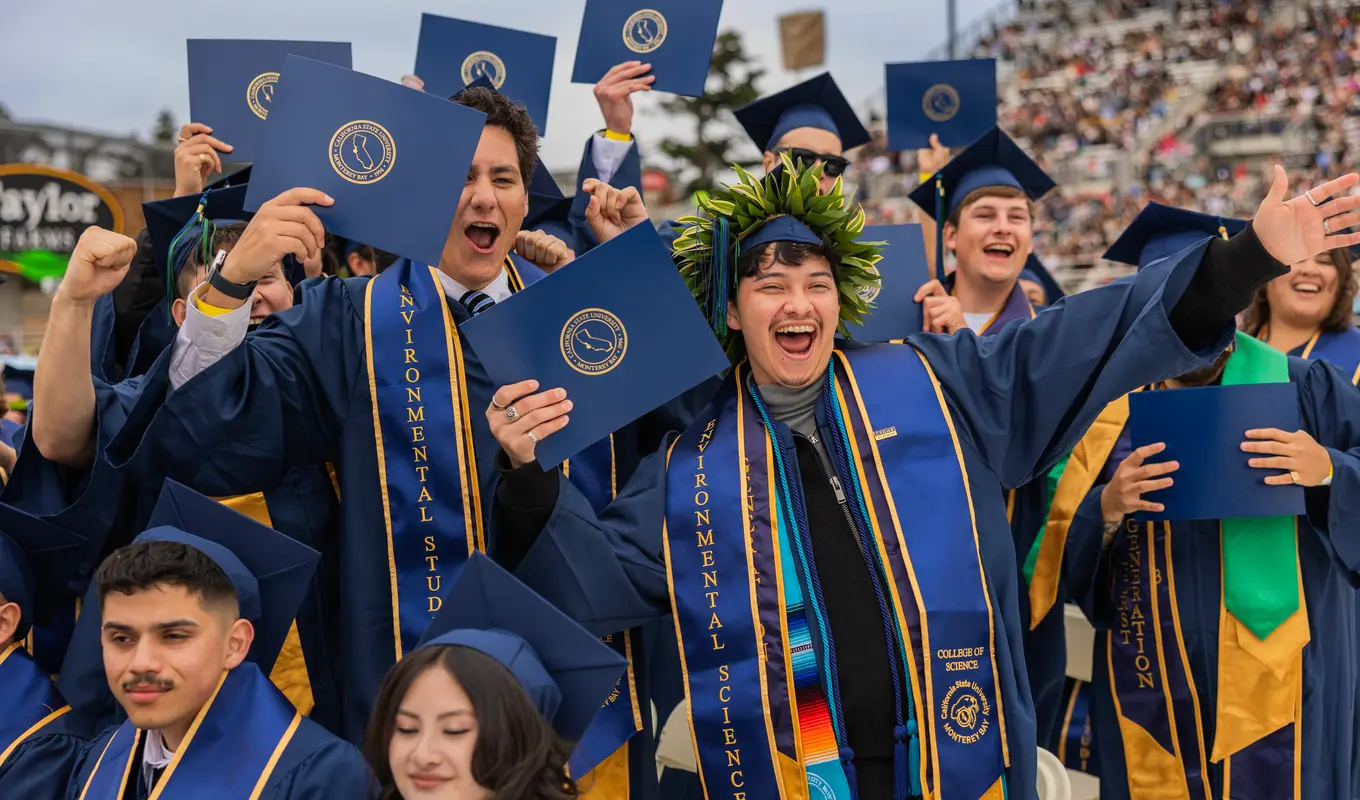
“We’re about to have 7,500 students walk across the stage in six weeks,” Passeggi stated. “Our main goal is that they have robust partnerships with employers.” The campus is committed to creating career-related opportunities that are accessible to all students, including those balancing work and studies.
Her office has been instrumental in helping faculty embed micro-internships directly into course curricula. Passeggi herself experienced this firsthand when an upper-division marketing class tasked students with analyzing her office’s marketing strategies. Students were compensated and received course credit for their contributions, culminating in an end-of-semester presentation.
“Career embeddedness into the curriculum is the best way to get to students,” Passeggi asserted. “We seek them out so they don’t have to seek us out.” This proactive approach ensures that career development is not an afterthought but an integral component of the academic journey for every student.






 Explore AI Teaching Tools
Comments (0)
Please login to comment
No comments yet
Be the first to comment on this article