
Quantum Leap: Universities Charting the Future of Physics and Advanced Mathematics
The world is on the cusp of a quantum revolution, a transformation poised to redefine industries and solve some of humanity's most pressing challenges. As governments worldwide recognize the strategic importance of this emerging field, investing heavily in infrastructure and talent, a new generation of scientists and mathematicians is being trained to lead the charge. This isn't just about theoretical physics; it's about building the tangible technologies that will shape our future.
Forging the Quantum Frontier: Graduate Programs Leading the Charge
The pursuit of knowledge in advanced physics and mathematics is no longer confined to ivory towers. Universities are now actively cultivating programs designed to equip graduate students with the skills needed to translate complex scientific principles into real-world applications. These programs are at the forefront of research, pushing the boundaries of what's possible in quantum mechanics and its myriad applications.
Brock University: Cultivating Research Prowess in a Natural Haven
Nestled within a UNESCO Biosphere Region, Brock University offers a graduate experience that seamlessly blends rigorous academic pursuit with unparalleled research opportunities. The Faculty of Mathematics and Science is home to internationally recognized professors who are actively shaping the landscape of physics and mathematics.
Students embarking on graduate studies in mathematics or physics at Brock gain advanced competencies that extend far beyond the academic realm. These skills are highly sought after in sectors such as technology, finance, policy development, and cutting-edge research. The university’s commitment to fostering published research experts ensures graduates are prepared for the most prestigious scientific journals.
Imagine contributing to the advancement of quantum materials by studying the peculiar behaviors of ultra-cold lithium, or developing novel materials that could significantly enhance the efficiency of batteries and hybrid energy storage systems. These are the kinds of impactful projects Brock University students can engage with.
For international students seeking hands-on training in the experimental, theoretical, and computational techniques that define modern materials science, the Master of Science in Material Physics (MSMP) program stands out. This program offers a comprehensive curriculum designed to prepare students for the demands of advanced scientific careers.
The MSMP degree can be completed in either 16 months or two years, with the longer option including a substantial research project. This flexibility allows students to tailor their educational journey to their specific career aspirations and timelines. The program's location, a short drive from the iconic Niagara Falls, provides a serene backdrop for intense academic focus.
Recognizing the importance of clear communication in science, Brock University offers a Graduate Science Preparation Seminar for non-native English speakers. This seminar is designed to bolster technical language skills, a crucial asset for professionals in the global scientific community. This foundational support ensures all students are well-equipped to engage with the program's advanced coursework.
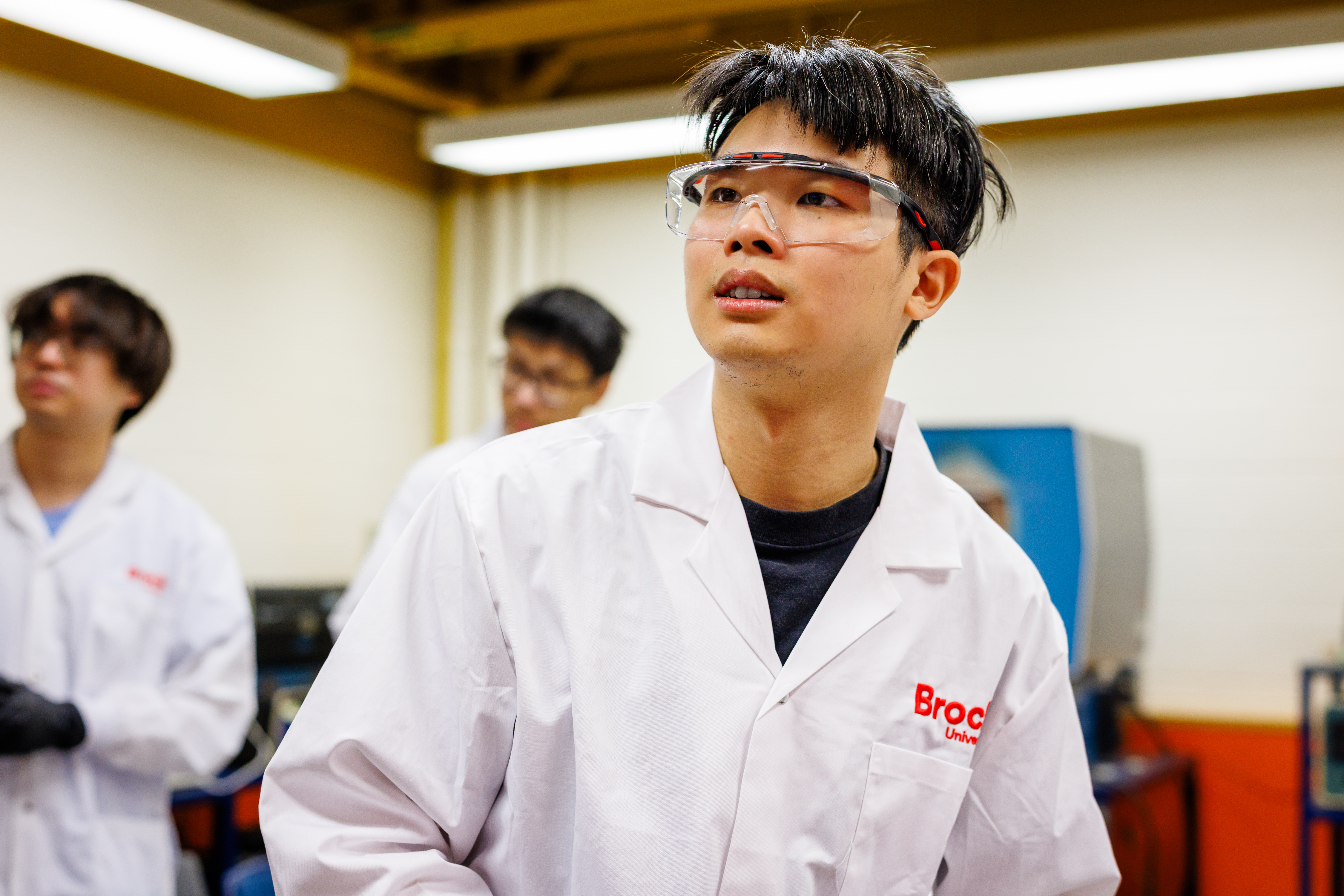
Upon completion of the preparatory seminar, students gain access to state-of-the-art, industry-standard instrumentation. This includes advanced equipment like a scanning electron microscope and physical property measurement systems, all geared towards providing practical, hands-on experience that prepares graduates for immediate impact in their future roles.
The success of Brock's MSMP graduates is evident in their career trajectories. Alumni have secured positions as materials technologists, data scientists, and laboratory technicians at leading organizations. The program's emphasis on both theoretical understanding and practical application proves invaluable in the competitive job market.
Pratik Bhanuse, a graduate of the MSMP program, attests to its transformative impact. "I can confidently say that the diverse and challenging courses of the MSMP programme at Brock University played a pivotal role in preparing me for my current position as a quantitative finance researcher," he states. "Specialised physics courses allowed me to approach problems with a purely quantitative perspective and utilise programming to find innovative solutions."
For those just beginning their university journey, Brock offers foundational undergraduate programs such as the BSc in Physics and the BSc in Mathematics. These interdisciplinary degrees can be customized through various concentrations, including Quantum Materials, Theoretical Physics, and Applied Mathematics, allowing students to discover their research potential early on.
Students at Brock benefit from the guidance of award-winning faculty. Physics Professor Dr. Kirill Samokhin and Mathematics Professor Dr. Stephen Anco, both recognized among the top 2% of international scientists in their fields according to a prestigious university ranking, serve as exemplary advisors, fostering a culture of academic excellence and groundbreaking research.
The University of Texas at Dallas: Igniting Innovation in a Thriving Metropolis
Situated in one of the United States' most rapidly expanding metropolitan areas, the School of Natural Sciences and Mathematics (NSM) at the University of Texas at Dallas (UTD) is dedicated to nurturing lifelong curiosity and driving innovation. The school's extensive offerings, including 33 undergraduate and graduate programs and 40 research labs, provide a fertile ground for translating theoretical knowledge into practical scientific and mathematical advancements.
The Department of Physics at UTD offers graduate programs that provide a robust, professional-level foundation in core areas of physics. Students delve deep into classical mechanics, electrodynamics, quantum mechanics, and statistical mechanics, gaining a comprehensive understanding of the fundamental principles that govern the physical world.
Through cutting-edge research, students at UTD achieve international recognition, paving the way for diverse and rewarding careers in both academia and industry. The department's commitment to research excellence ensures graduates are well-prepared to tackle complex scientific challenges.
For students specifically interested in the burgeoning field of quantum technologies, the NSM hosts the UTD Centre for Quantum Integrated Systems. This center is at the forefront of exploring how quantum mechanics can revolutionize computation, communication, and sensing technologies, offering unparalleled opportunities for research and development.
The Master of Science in Physics program at UTD is ideal for those seeking to master the fundamental principles and current applications of physics. Led by widely cited experts, this program requires a minimum of 30 credit hours, including four core courses. Students then have the flexibility to customize their curriculum through four distinct specialization tracks, such as condensed matter physics/materials science or atmospheric and space physics.
Undergraduate students can begin building their knowledge base with Bachelor of Science or Bachelor of Arts degrees in Physics. Even at this early stage, students have the opportunity to explore research within the Natural Science and Engineering Research Laboratory. This state-of-the-art, 192,000-square-foot facility, developed in collaboration with scientists and engineers from a leading technology firm, offers a glimpse into the future of scientific discovery.
University of California, Davis: Pioneering Impact in the Golden State
As part of the esteemed University of California system, ranked highly for graduate financial success, the Department of Physics and Astronomy at the University of California, Davis (UC Davis) is dedicated to producing graduates who make a significant impact across various industries. Alumni have been instrumental in developing new medical devices, leading major scientific projects at national laboratories, and fostering innovation in the startup ecosystem.
For individuals aspiring to advance their careers in quantum science, UC Davis offers master's degree programs designed to provide specialized knowledge and research experience. These programs typically span four to six quarters, allowing for intensive study and skill development.
Students can choose between two distinct pathways to earn their master's degree. Plan I involves 32 quarter hours of graduate coursework culminating in a thesis, offering an in-depth research experience. Plan II requires 36 quarter hours of coursework and concludes with a comprehensive oral examination, providing a broad and rigorous academic assessment.
The curriculum covers essential physics topics, including classical mechanics, electrodynamics, quantum mechanics, and statistical mechanics. Instruction is delivered by distinguished experts in their respective fields, providing students with invaluable insights and mentorship. Opportunities to collaborate within multidisciplinary centers, labs, and international projects further enrich the learning experience.
Prospective undergraduate students can prepare for advanced studies through the Bachelor of Arts or Bachelor of Science in Physics programs at UC Davis. These programs provide a strong foundation in both classical and modern physics, complemented by six quarters of calculus and other essential mathematics courses. This comprehensive preparation equips students with the necessary tools to excel in higher-level subjects like quantum mechanics and condensed matter physics.
The Enduring Value of Foundational Science
The advancements in quantum science and technology are not merely theoretical curiosities; they represent a tangible shift in our capacity to innovate and solve complex problems. From enhancing manufacturing processes to fortifying global supply chains against unpredictable disruptions, the applications are vast and transformative.
The universities highlighted are not just imparting knowledge; they are cultivating a new generation of thinkers and doers. By focusing on rigorous research, interdisciplinary approaches, and practical application, these institutions are ensuring that their graduates are not only prepared for the challenges of today but are also equipped to invent the solutions of tomorrow. The future of physics and advanced mathematics is being written in their labs and lecture halls.






 Explore AI Teaching Tools
Comments (0)
Please login to comment
No comments yet
Be the first to comment on this article