
Elite Colleges Unlock Doors for Rural Students, But the Journey Through College Remains the Next Frontier
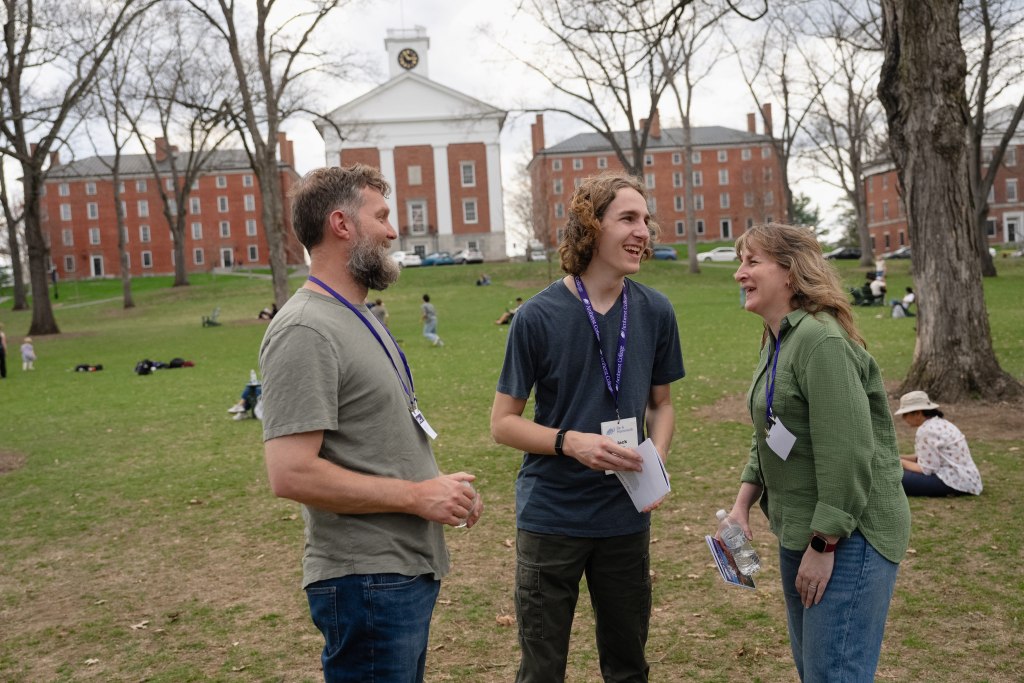
The crackle of a fire pit on the Amherst College campus might seem like a simple campfire gathering, but for a group of high school seniors from across the nation, it represented a pivotal moment. These students, hailing from the often-overlooked corners of rural America, were on campus for a special visit, a testament to a growing movement aimed at broadening the horizons of those who traditionally haven't seen themselves at such prestigious institutions.
Bridging the Gap: A New Era of Recruitment
The scene was intentionally crafted. As flames finally licked the logs, Assistant Dean of Admissions Nathan Grove lightheartedly framed fire-building as a "test of how rural you are." This playful challenge underscored the unique backgrounds of the admitted students, many of whom were experiencing a top-tier private college for the first time. For Jack Hancock, a high school senior from Milford, Pennsylvania, the invitation itself was a revelation.
"I was frankly sort of shocked that they cared about rural students," Hancock admitted, reflecting on his journey to being admitted to Amherst, a feat achieved against steep odds. His presence, alongside his parents, signaled a crucial phase in a multi-year initiative: not just getting rural students to apply, but convincing them to enroll.
The STARS Network: A $170 Million Investment in Rural Futures
This concerted effort is largely fueled by the STARS College Network (Small Town and Rural Students). Launched with a significant $20 million donation from Byron Trott, a University of Chicago alumnus and trustee, the network was born from a deep concern over the underrepresentation of rural students in higher education. Trott, who himself came from a rural background, observed a stark disparity: while nearly a quarter of the American population resides in rural areas, only a tiny fraction of students at his alma mater, and many similar institutions, shared that background.
Data paints a clear picture of this challenge. According to the U.S. Department of Education, 90 percent of rural students graduate from high school, a rate that actually surpasses their urban and suburban counterparts. However, the National Student Clearinghouse Research Center reports that only slightly over half of these graduates transition directly to college, a figure that has seen a decline since 2016 and remains lower than the nearly 60 percent of urban and 63 percent of suburban graduates who pursue higher education.
Trott’s commitment has since expanded, with an additional $150 million injected into STARS. The network has grown from its initial 16 member schools to 32, now including esteemed institutions like Brown, Caltech, Columbia, Dartmouth, MIT, Stanford, UC Berkeley, and Yale. This expansion is directly linked to a strategic shift in recruitment: these universities have pledged to actively recruit at rural high schools, locations previously seldom visited by admissions officers. Research from 2019 indicated a clear bias, with admissions representatives more likely to frequent higher-income public and private schools in urban and suburban settings.
From Application to Enrollment: The Next Hurdle
The impact of STARS is already evident. Last year, the organization reported that over 90,000 rural students applied to its member institutions, marking a 15 percent increase from the previous year. This surge in applications signifies a growing awareness and aspiration among rural youth, but the work is far from over. The focus has now shifted to ensuring these students not only gain admission but also successfully navigate and complete their college education.
"This process is moving into not just the ‘to college’ part but the ‘through college’ part," explained Marjorie Betley, deputy director of admissions at the University of Chicago and executive director of STARS. This transition presents a unique set of challenges, as ingrained perceptions about the value and impact of higher education persist in many rural communities.
Cultural Perceptions and Financial Realities
A recent Quinnipiac University poll revealed that rural Americans are less likely than their urban and suburban counterparts to view college as beneficial, with some even believing it can negatively influence political views and personal values. This sentiment often translates into a perception that higher education, especially at selective institutions, is simply "not worth it."
Jack Hancock echoed this observation, noting that many of his classmates and their parents don't see the value. The common path for those who do pursue further education often leads to community colleges or local state university branches, rather than elite private schools. The cultural norm in some rural areas emphasizes humility and avoiding ostentation, a point illustrated by Hancock’s mother, Jodi, who ordered a small window decal for her older son’s car, wanting to avoid drawing undue attention to his attendance at a private college.
"That’s a rural cultural idea, that you don’t want to put yourself better than anybody," she shared. "We certainly didn’t want to put on airs."
Beyond cultural perceptions, financial barriers remain significant. The U.S. Department of Agriculture reports that median incomes in rural households are approximately 12 percent lower than the national average, even after accounting for a reduced cost of living. This economic reality can make the prospect of attending an expensive private college daunting.
The younger Hancock described how, during campus tours, the difference in socioeconomic backgrounds was palpable. "Certain ones would have a lot more higher-wealth suburban people. Maybe they went to private school. They dressed in designer fashions," he noted, highlighting the stark contrast with his own experiences.
The Invisible Hurdles: Homesickness and Belonging
Experts point to less quantifiable factors that can deter rural high school graduates. Feelings of homesickness and a sense of not belonging can be significant obstacles. National Student Clearinghouse data indicates that rural students who do enroll are more likely to drop out than their urban and suburban peers, and less likely to graduate than suburban students.
Olivia Meier, a college-bound senior from Chugiak, Alaska, has witnessed these challenges firsthand. "The first is cost, and the second is not knowing what we’re capable of," she stated. Despite her school boasting a high graduation rate of 91 percent, only 48 percent of its graduates continue to college. "A lot of people, they just don’t see it in the cards for them," Meier explained, believing that "the schools are too selective for us to be able to get into."
This self-doubt is a common thread for many rural students. Meier herself felt it keenly until she learned of a student from her school being admitted to the University of Chicago. "I was absolutely shocked, because for me those schools were always something far out that wouldn’t necessarily be available to me," she said. Her own acceptance to Amherst through early decision marked a significant personal victory against this pervasive sense of limitation.
Navigating the Elite Landscape: Support and Belonging
The environment at selective colleges can indeed feel "rarefied," as Mara Tieken, a professor of education at Bates College and author of "Educated Out: How Rural Students Navigate Elite Colleges — and What It Costs Them," describes. Having begun her career as a teacher in rural New Hampshire and Tennessee, Tieken understands the cultural chasm that can exist.
"No one hunts. No one shops at Walmart. No one listens to country music. So some of the things that would have seemed so familiar to my students would be totally foreign," Tieken observed, highlighting the potential for cultural disconnect.
Furthermore, rural students from lower-income families may lack the familial or social networks that can help navigate the complex college application and financial aid processes. The proportion of rural Americans aged 25 and older with an associate degree or higher is about a third, significantly lower than the nearly half found in urban and suburban areas.
Campus Visits as a Bridge to Opportunity
Initiatives like the accepted student day at Amherst are designed to bridge this gap. Several STARS member schools cover the expenses for prospective and admitted rural applicants to visit their campuses for a day or two. Last year, over 1,000 students took advantage of these opportunities, participating in classes, meals, social events, and overnight stays.
Catherine Colberg, a high school senior from St. Joseph, Minnesota, found the Amherst campus visit transformative. Comparing her hometown school's limited resources – joking about sharing "one test tube" – with Amherst's state-of-the-art facilities, she found the experience "huge." Grove, who now also serves as Amherst's coordinator of rural outreach, confirmed that many rural students have "a lot less access to things that would prepare them for college."
Building Networks and Finding Community
Ryan Peipher, a junior at Amherst and a neuroscience major from Lancaster, Pennsylvania, has witnessed these disparities firsthand, even at Amherst. He noted that many students arrive with extensive experience in advanced coursework and extracurriculars, often stemming from private Northeastern schools. "A good portion of Amherst students come from private Northeastern schools, who have been in upper-level chemistry, upper-level classes, and had experiences that rural students haven’t had," Peipher explained.
The lack of established personal and professional networks can also be a significant hurdle. "It’s very easy for a student who comes to Amherst from a Philadelphia private school to network with someone who is also in finance who they know from a family friend," Peipher said. "But for a student from rural America who doesn’t have any family members or any connections to the finance industry, how can they network? How can they get that first leg up?" To address this, Peipher helped establish a rural student support group on campus.
The Broader Impact: Diversity of Thought and Future Leadership
Despite these challenges, increasing the number of rural students at colleges like Amherst offers significant benefits, not only for the students themselves but also for the institutions they attend. Amherst President Michael Elliott emphasizes the value of diverse perspectives.
“Students growing up in rural areas bring perspectives and experiences that students from urban environments don’t have," Elliott stated. "They’ve grown up in different regions where maybe the politics feel different, where the culture feels different, and we are interested in the prospect of bringing students together with a diversity of experiences to learn from one another.”
Since joining STARS, Amherst has seen a notable increase in its rural student population. Last year, the college admitted 96 students from small towns and rural areas, up from 70 the previous year, aided by generous financial aid packages. This has boosted the proportion of rural students on campus from 6 percent to 11 percent. This year, Amherst accepted 119 rural applicants, signaling continued growth.
These increases, while seemingly modest, hold long-term significance for rural communities. A Gallup survey indicates that fewer than half of young people in rural areas are optimistic about finding good jobs in their hometowns. By fostering pathways to higher education, institutions are not only opening doors for individual students but also potentially nurturing future leaders who may return to revitalize their communities.
Shifting Perceptions and Building Trust
STARS executive director Marjorie Betley is beginning to witness a positive shift in attitudes toward college in rural America. Counterintuitively, at a time when the value of higher education is being questioned across all demographics, admissions officers visiting rural areas are finding it easier to recruit students.
"That may sound counterintuitive. But part of the reason that distrust can grow, especially when we think about distrust in higher education, is that as colleges and universities, we haven’t been there for them," Betley explained. "We haven’t shown up, and we haven’t shown them that we are people who you can trust."
For many rural students, the idea of attending a selective school like Amherst still feels distant, almost like a fantasy. Kara Lewis, an Amherst junior from Mardela Springs, Maryland, described it as "something from a movie." Yet, her own experience of attending Amherst has fostered a deeper appreciation for her rural roots.
“There’s a very romantic sense that lots of students have coming from rural areas where it’s, like, ‘I wish I could get out of here,’ ” Lewis reflected. “I realized how unique it was. And I love it, like I never did when I was actually living there.”
This sentiment is echoed by Ryan Peipher, who aspires to attend medical school and return to his rural community to practice. "Once you do get away, you experience how special it was to grow up in that small town, and also the impact you can have," he said. "You’re determined to go back and make that change, make that difference."




 Explore AI Teaching Tools
Comments (0)
Please login to comment
No comments yet
Be the first to comment on this article