
Utah Universities Navigate New Frontier: Students Gain Right to Opt Out of Belief-Clashing Coursework
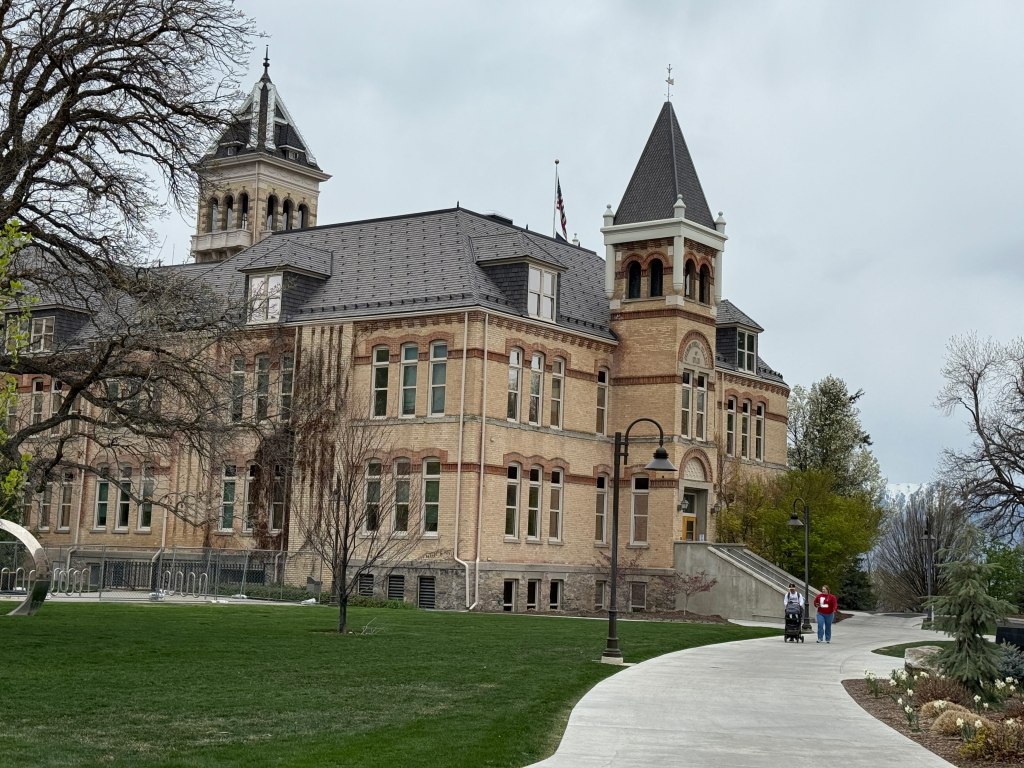
A freshman at Weber State University recently found herself at a crossroads, staring down a syllabus that presented a stark choice: engage with a film that challenged her deeply held religious and personal beliefs, or abandon a course required for her degree. This scenario, once a personal dilemma for students like Madelynn Wells, is now at the center of a new legislative landscape in Utah, one that grants students unprecedented agency over their academic journey.
The Uncomfortable Syllabus: When Beliefs Meet the Curriculum
Madelynn Wells, an 18-year-old devout Catholic and political conservative, enrolled in an introductory film studies class with the expectation of exploring cinematic arts. However, the curriculum soon presented a film that depicted a young woman embracing a lesbian identity, a narrative that deeply unsettled her.
The prospect of analyzing and writing about "Pariah," a film she researched and found to be a coming-of-age story centered on a lesbian protagonist, created significant unease. Wells expressed that the act of putting such content into writing felt particularly weighty, amplifying her discomfort.
Ultimately, the internal conflict led Wells to withdraw from the class. Her experience is far from unique in Utah, a state known for its significant and devout religious population, where students often grapple with balancing their faith and academic pursuits.
A Legislative Shield: Empowering Student Conscience
In response to such challenges, a new state law has been enacted, offering a unique protection for students. This legislation empowers students to request alternative assignments or exams if course material conflicts with their sincerely held religious or personal beliefs.
The law mandates that professors must accommodate these requests, provided they do not fundamentally alter the core nature of the course. This shift in power aims to ensure that students are not compelled to compromise their deeply ingrained values for academic credit.
However, the law includes specific guardrails to prevent frivolous objections. For instance, a student cannot claim a moral objection to mathematics in an algebra class. Furthermore, these accommodations are only required for courses fulfilling general education requirements or those essential for a student's major.
Divided Opinions: Academic Freedom Versus Personal Conviction
Despite these protective measures, the law has ignited a debate, drawing sharp lines between proponents and opponents. Advocates argue that students should not be forced to engage with assignments or exams that violate their moral compass, unless such engagement is absolutely critical to their chosen field of study.
Conversely, critics contend that exposure to diverse beliefs, even those one disagrees with, is crucial for intellectual development. They believe such encounters can deepen a student's understanding of their own convictions and foster critical thinking.
This Utah law, the first of its kind in higher education, echoes broader concerns surfacing in K-12 education. Efforts to emphasize conservative and religious values in public schools, and to limit discussions on topics like racial history, gender, and sexuality, parallel the sentiment behind this new legislation.
Echoes of National Debates: DEI, Ideology, and Student Agency
The Utah law also resonates with national discussions surrounding curriculum content and ideological influence in educational institutions. Past Supreme Court cases, siding with parents seeking to exempt children from lessons conflicting with religious beliefs, highlight the ongoing tension.
Statements from political figures have characterized some university curricula as promoting "woke, socialist, and anti-American ideology." This sentiment has fueled a wave of state-level bills targeting diversity, equity, and inclusion (DEI) initiatives and influencing how sensitive topics are addressed in classrooms.
However, the Utah law takes a distinct approach. Instead of dictating curriculum content, it shifts the locus of control to the student, granting them the authority to determine when academic material crosses a personal or religious boundary.
Navigating the Nuances: Faculty Perspectives and Existing Protections
Amy Reid, director of the Freedom to Learn initiative at PEN America, emphasizes the faculty's role in ensuring all students benefit from their education. While accommodations for disabilities or religious holidays are standard, Reid questions whether this new law truly serves that pedagogical goal.
She argues that educators should foster engagement with challenging ideas, providing necessary support rather than encouraging students to disengage. "You encourage students to engage with ideas, and you provide them with the support that they need," Reid stated, "so that they are able to complete the work."
Reid believes that encountering differing viewpoints can clarify one's own beliefs, rather than necessarily changing them. Many Utah universities, including Weber State, already offer avenues for students to discuss controversial topics with peers holding diverse opinions outside of formal class structures.
The Case of the General Education Credit: A Different Path
Madelynn Wells, a zoology major, had enrolled in the film studies course to fulfill a general education arts credit. After dropping the class, she found numerous other options to satisfy the requirement, ultimately choosing photography.
However, had the film studies course been essential for her graduation, Wells would have faced the difficult decision of either enduring her discomfort or confronting her professor about an alternative assignment. In such a scenario, a different coming-of-age film or a work by a Black screenwriter might have been a viable substitute, depending on the assignment's pedagogical aims.
Evolution and Ethics: A Student's Internal Dialogue
Seth Mulkey, a junior at Utah State University, recounted a similar experience in a general education biology class that covered evolution. As an evangelical Christian who believes in a seven-day creation, Mulkey found it challenging to reconcile his beliefs with the scientific presentation of evolution as fact.
He described the experience as disheartening, feeling pressured to learn about concepts that contradicted his fundamental beliefs. Mulkey typically attempts to compartmentalize, engaging with such topics from an intellectual standpoint while privately holding his own views.
While Mulkey indicated he likely wouldn't have sought an accommodation for group discussions, he acknowledged that a writing assignment requiring him to actively support evolution might have prompted him to request an alternative. This highlights the distinction between passive engagement and active endorsement of beliefs.
Utah's Religious Landscape: A Context for the Law
Utah's unique demographic makeup provides a crucial context for understanding the new law. With approximately 76 percent of its residents identifying as religious, significantly higher than the national average of 49 percent, the state presents a fertile ground for such legislation.
Data from the Pew Research Center indicates that about half of Utah residents are members of the Church of Jesus Christ of Latter-day Saints, with another 13 percent belonging to other Christian denominations. This deeply religious environment shapes the educational experiences and concerns of its student population.
From Personal Anecdote to Legislative Action: The Genesis of the Bill
The impetus for the bill reportedly stemmed from a personal experience of Republican state representative Michael J. Petersen. His daughter, pursuing a master's degree out-of-state, was assigned to write a letter to a legislator advocating for LGBTQ+ rights—an assignment that conflicted with her beliefs.
Petersen assisted his daughter in crafting a neutral response. This incident sparked his legislative efforts, leading to the drafting of the bill that now grants students similar protections within Utah's public higher education institutions.
Under the new law, Petersen's daughter, had she been an undergraduate in Utah, would have been protected from being required to take a specific public stance on political, social, religious, moral, or community matters. She also would have had the right to request an alternative assignment.
Distinguishing Academic Discourse from Political Advocacy
While the scenario of requiring a student to send a letter advocating for a particular political stance is widely considered problematic, even by those who support academic rigor, the new law broadens the scope of potential opt-outs.
Mike Gavin, president and CEO of the Alliance for Higher Education, acknowledges that asking students to consider other perspectives is a reasonable pedagogical tool. However, he draws a firm line at requiring students to publicly endorse views that contradict their own, deeming such actions potentially problematic and outside the realm of academic freedom.
Gavin suggests that existing mechanisms for case-by-case accommodations between professors and students are sufficient. He expresses concern that the broad permission to opt out may hinder students' intellectual growth, arguing that encountering uncomfortable ideas is a normal part of college and not necessarily detrimental.
A Historical Precedent: The University of Utah's Settlement
The current legislation in Utah is not the first instance of the state grappling with coursework objections based on deeply held beliefs. In 1998, a theater student at the University of Utah objected to reading profanity in a script, leading to a lawsuit against the university.
The settlement agreement mandated the university to develop a policy addressing coursework objections tied to sincerely held beliefs. However, that policy still required students to demonstrate an understanding of essential course concepts, a requirement that the new law removes.
Faculty Flexibility and the "Pedagogically Necessary" Clause
Sarah Projansky, vice provost for faculty and academic affairs at the University of Utah, notes that faculty often accommodate students who cannot engage with certain course materials, regardless of the reason. She emphasizes working with students to find alternatives when a specific film or assignment presents a barrier.
"It’s not my business why a student can’t be there. Religion, sincerely held belief of conscience, memory, family memory. It doesn’t matter, they can’t be there," Projansky stated. She added that accommodations are readily made for anything not "pedagogically necessary."
Concerns Over Chilling Effects and Faculty Overcorrection
Nicole Allen, a communications professor at Utah State, views the law as a "solution in search of a problem," given existing institutional policies and faculty's ability to handle such issues individually. She believes students should not endure "gratuitous discomfort" as long as course objectives are met.
However, some worry that the law, while not directly dictating curriculum, could indirectly impact academic freedom. Reid of PEN America fears that faculty might preemptively avoid controversial topics or sensitive readings to circumvent potential conflicts and the associated administrative burdens.
The fear of negative repercussions, such as lengthy bureaucratic processes or public controversies, could lead educators to self-censor, potentially limiting the intellectual breadth of their courses. Examples of faculty facing professional consequences for their teaching on sensitive subjects are cited as a cautionary tale.
Fostering Dialogue: Universities Championing Engagement Beyond the Classroom
Despite the new opt-out provisions, many public colleges in Utah actively promote opportunities for students to engage with challenging topics and diverse perspectives outside of formal coursework. These initiatives aim to cultivate critical thinking and respectful discourse.
Institutions frequently host facilitated forums where students can discuss controversial subjects with peers and faculty. These events, often incentivized with free meals, encourage deep dives into complex issues and the exploration of differing viewpoints.
At Weber State University, the Walker Institute of Politics and Public Service spearheads such dialogue programming. Recent events have brought together students, staff, and faculty to discuss geopolitical conflicts, fostering an environment of open exchange.
The Architecture of Open Dialogue: Rules for Respectful Engagement
Leah A. Murray, director of the Walker Institute, outlines strict rules designed to ensure a comfortable and productive environment for these discussions. Participants are required to read the same material, refrain from using electronic devices, and avoid taking notes, with an understanding that conversations are confidential.
These guidelines are intended to encourage free expression and create a safe space for individuals to voice their opinions without fear of reprisal or public scrutiny. The institute sometimes selects topics, while other times student suggestions drive the discussions.
Personal Growth Through Intellectual Challenge
Adam Nichols, a junior studying to become a high school teacher, proposed a discussion on the Iran conflict. He sought to develop the language and confidence to discuss such complex issues with others in his life.
Nichols believes that confronting his own strongly held beliefs, both in class and through dialogue programs, forces him to re-evaluate his perspectives. He values being corrected over remaining under false pretenses, highlighting the transformative power of intellectual engagement.
A Professor's Perspective: Balancing Conscience and Curriculum
Murray herself sees value in the accommodations offered by the new law, drawing from her own undergraduate experience. As a vegan, she opted for geology over biology to avoid a required pig dissection, an assignment she felt violated her conscience at the time.
This personal experience informs her approach to teaching. At the start of each term, she humorously but seriously advises students that if learning something in her class could lead to eternal damnation, they should feel free to drop the course, underscoring her commitment to student well-being.






 Explore AI Teaching Tools
Comments (0)
Please login to comment
No comments yet
Be the first to comment on this article