
Elevating Teaching in South Africa: Insights from TALIS for a Brighter Educational Future
The pursuit of exceptional education hinges on the strength of its teachers.In South Africa, a significant stride has been made in understanding and enhancing the teaching profession, particularly within the crucial lower secondary grades.
The recent unveiling of results from the Teaching and Learning International Survey (TALIS) offers a profound opportunity for reflection and strategic advancement.
This comprehensive analysis, a cornerstone for global educational dialogue, provides invaluable data to shape policies and foster a more robust and effective teaching force across the nation, ultimately impacting learning outcomes for countless students.
Unpacking the TALIS Framework: A Global Lens on South African Education
The Teaching and Learning International Survey (TALIS) stands as the world's most extensive study focused on the teaching profession.Its primary aim is to gather comparable data on the working conditions and professional development of teachers and school leaders across numerous countries.
For South Africa, participation in TALIS, particularly with the latest 2024 findings following its initial engagement in 2018, represents a critical mechanism for self-assessment and targeted improvement.
This data acts as a vital "mirror," allowing the education system to critically examine its strengths and identify areas requiring focused attention to refine its core mission of fostering effective learning.
The insights gleaned are instrumental for policymakers in developing and implementing evidence-based strategies that nurture a high-quality teaching profession.
The Significance of TALIS for Policy and Practice
The TALIS survey provides policymakers with timely and valid information, enabling them to review and refine national education policies.By understanding the realities faced by teachers and school leaders, governments can make informed decisions about resource allocation, professional development initiatives, and curriculum design.
This international comparison also allows South Africa to benchmark its progress against other nations, identifying best practices and potential pitfalls.
The commitment of the South African Department of Basic Education to enhancing teacher professionalism and development is underscored by its engagement with such rigorous international assessments.
South Africa's Teaching Landscape: Trends and Opportunities
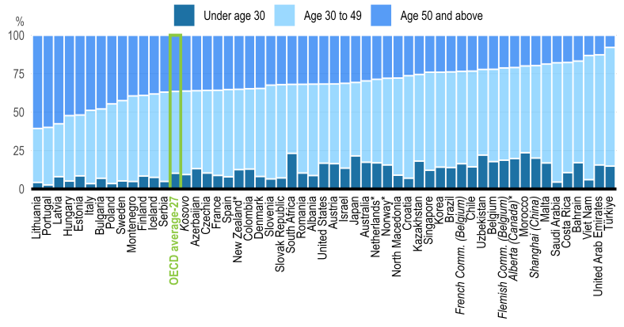
The recent TALIS results paint a picture of a dynamic and evolving teaching force in South Africa.Notably, the profession appears stable, characterized by a relatively younger cohort of educators compared to international averages.
This demographic shift, with the average age of South African teachers decreasing from 43 to 41 years between 2018 and 2024, suggests a successful effort in attracting new talent to the field.
This is a positive indicator, as a younger teaching population can bring fresh perspectives and energy to the classroom.
Attracting and Retaining Early-Career Educators
A significant finding from TALIS is South Africa's success in drawing younger individuals into teaching.The data indicates a higher percentage of teachers under the age of 30 compared to many other participating countries.
This is a testament to the appeal of the teaching profession for emerging talent and the effectiveness of initiatives aimed at encouraging new graduates to enter the field.
The survey also highlights the positive experiences of these novice teachers, with a substantial majority reporting satisfaction with their initial teacher education qualifications.
Preparedness of New Teachers: Strengths and Areas for Growth
Research indicates that a high percentage of recent graduates felt well-prepared by their initial teacher education programs in several key areas.This includes:
- Subject content knowledge (83%)
- General pedagogical approaches (85%)
- Teaching in multicultural or multilingual settings (77%)
- Utilizing digital resources and tools for teaching (75%)
- Supporting students' social and emotional development (72%)
However, the data also points to a slight decrease in the percentage of recent graduates feeling prepared in subject content between 2018 and 2024.
This suggests a need for ongoing review and potential enhancement of pre-service training to ensure it consistently meets the evolving demands of subject matter expertise.
The Evolving Role of the Teacher: Navigating Complexity and Demands
In today's rapidly changing world, the role of a teacher extends far beyond traditional content delivery.Teachers are increasingly expected to be adaptive designers of learning experiences, cultural facilitators, and skilled navigators of complex classroom dynamics.
This multifaceted role demands a sophisticated skillset, including mastery of advanced pedagogical techniques such as differentiated instruction and linguistic scaffolding, to cater to diverse learner needs.
The TALIS findings underscore the growing complexity of the teaching profession and the resultant increase in teacher workload.
The Imperative for Continuous Professional Development
The evolving demands on teachers highlight the critical importance of continuous upskilling and professional development.To effectively meet the challenges of modern education, teachers require ongoing training in adaptive pedagogy, digital integration, and strategies for supporting diverse learners.
This is particularly relevant in South Africa, where a younger teaching cohort may benefit from structured mentorship and advanced training opportunities to build upon their initial qualifications.
Addressing Skill Gaps in Specialized Teaching Areas
Studies indicate that persistent training gaps exist within the teaching profession, often stemming from the dynamic nature of educational requirements.For instance, research suggests that teachers may require enhanced skills to effectively support students with special educational needs or those whose home language differs from the language of instruction.
Furthermore, the integration of artificial intelligence (AI) into education presents a new frontier, necessitating training for teachers on how to leverage these tools for enhanced teaching and learning.
Recommendations for Enhancing Teacher Training Models
To address these identified skill gaps, higher education institutions involved in pre-service teacher education are encouraged to critically examine and refine their training models.The goal is to ensure that all aspiring teachers are thoroughly equipped with the competencies needed to elevate classroom practices and foster optimal learning outcomes.
This includes a focus on:
- Developing robust subject matter expertise.
- Mastering diverse pedagogical approaches for varied learning styles.
- Cultivating skills in digital literacy and the effective use of educational technology.
- Preparing teachers to address the unique needs of diverse student populations, including those with special educational requirements and multilingual learners.
- Fostering an understanding of socio-emotional learning and student well-being.
Commitment to Excellence: South Africa's Path Forward
South Africa's high participation rates in the TALIS survey are a powerful testament to the dedication of its educators and the commitment of the nation to improving the quality of education.The discussions held at the launch event, involving education ministers and experts, centered on harnessing collective knowledge to transform classroom pedagogy and develop a skilled teacher workforce ready for the demands of today's learning environments.
Collaboration and Strategic Action
The endorsement of the TALIS findings by Ministers Siviwe Gwarube and Buti Manamela signifies a strong commitment to collaborative action.Their departments will work in tandem to strengthen the teacher workforce, addressing identified learning deficits and professional growth points among teachers.
This unified approach is crucial for implementing effective strategies and ensuring that the insights from TALIS translate into tangible improvements in the education system.
Building Bridges for Learners
Ultimately, the participation in TALIS and the subsequent analysis of its outcomes are vital for understanding and supporting teachers.By providing educators with the necessary resources, training, and professional development opportunities, South Africa can empower them to build meaningful bridges for their learners, fostering a future where every student has the opportunity to thrive and reach their full potential.
The journey of continuous improvement in education is ongoing, and the insights from TALIS provide a critical roadmap for navigating this path with clarity and purpose.





 Explore AI Teaching Tools
Comments (0)
Please login to comment
No comments yet
Be the first to comment on this article