
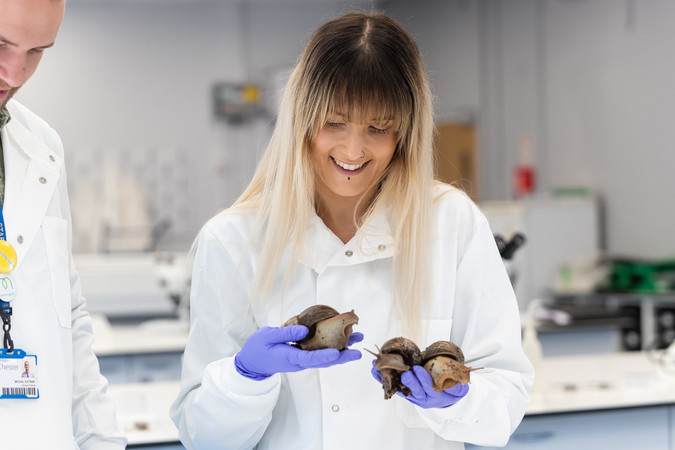
Beyond the Lab Coat: Universities Cultivating Tomorrow's Science Leaders
The world of science is a dynamic frontier, constantly pushing the boundaries of human knowledge and innovation. From deciphering the intricate mechanisms of life to engineering solutions for a sustainable future, science graduates are at the forefront of tackling humanity's most pressing challenges. But where do these future leaders hone their skills and cultivate their passion? This article explores three distinguished universities that are not just teaching science, but actively shaping the next generation of influential figures in the field.
The Interconnected Fabric of Modern Science
A degree in the natural sciences offers a passport to a multitude of impactful careers. Imagine graduates who can predict and mitigate disease outbreaks by analyzing complex data patterns, or those who dedicate their work to developing life-saving vaccines and pioneering renewable energy technologies. These diverse paths, while distinct, are united by a common purpose: leveraging scientific understanding to profoundly improve the human condition and the health of our planet.
For those drawn to this noble pursuit, a solid foundation in the natural sciences is paramount. Biologists are instrumental in safeguarding our planet's biodiversity and preserving delicate ecosystems. Chemists are tirelessly working to discover safer materials and develop environmentally responsible industrial processes. Physicists, meanwhile, are contributing vital advancements in areas ranging from sophisticated medical imaging to the development of sustainable energy solutions.
If the prospect of contributing to these critical areas ignites your ambition, consider embarking on your educational journey at one of the following institutions, renowned for their commitment to fostering scientific excellence and leadership.
Chester: Weaving Biology, Chemistry, and Physics into Real-World Solutions
The School of Natural Sciences at the University of Chester distinguishes itself by integrating the disciplines of biology, chemistry, and physics in a manner that authentically mirrors the collaborative nature of scientific work. This approach equips students with a holistic understanding of how scientific principles interrelate and are applied to solve complex problems.
A Graduate's Impact: From Zoology to Wildlife Conservation
A compelling example of this philosophy in action is Lyndon Howson. After achieving a First-Class Honours degree in BSc Zoology, Lyndon pursued an MRes in Hedgehog Conservation. His dedication and expertise have led him to a pivotal role as a Wildlife and Wellbeing Officer at Chester Zoo.
Lyndon's passion for conservation has garnered significant recognition, including prestigious accolades such as the People of Nature Award, Conservationist of the Year – Fauna, and the Mammal Champion Award from The Mammal Society. These awards celebrate his groundbreaking work in hedgehog conservation, demonstrating the tangible impact of a Chester science education.
“The University of Chester has been central to my journey,” Lyndon shares. “From the unwavering support of my lecturers to the invaluable opportunities I’ve had to lead projects and immerse myself in my passions, Chester has instilled in me the confidence, skills, and experiences necessary to achieve more than I ever thought possible.”
A Campus Designed for Discovery and Growth
Chester's Exton Park campus is the hub for its research-informed, problem-based learning methodology. Regardless of the specific course chosen – whether it’s the BSc in Animal Behaviour (with an optional placement year), MSc in Animal Behaviour (offering one or two-year placement options), BSc Biology, MSc Biotechnology, BEng/MEng Chemical Engineering, BSc Chemistry, BSc Marine Biology, MRes Natural Sciences, MSc Stem Cells and Regenerative Medicine, or MSc Wildlife Conservation – the educational environment remains consistent.
Students benefit from state-of-the-art facilities and a campus environment meticulously designed to stimulate curiosity and foster innovation. Beyond the academic spaces, the university offers comprehensive indoor and outdoor sports facilities, alongside a vibrant student union with a diverse array of societies. This holistic approach acknowledges that sometimes, the most profound solutions emerge when one steps away from the immediate demands of the lab and allows ideas the space to breathe and develop.
A Network of Support for Every Student
The University of Chester’s commitment extends beyond high-quality teaching and cutting-edge facilities. A defining characteristic of studying here is the pervasive, whole-school and whole-university support system. This ensures that students feel empowered and encouraged throughout their academic careers.
“Throughout our time here, we have felt consistently supported and encouraged to ask questions, experiment with new ideas, and grow into independent scientists,” attest Madeleine Dasher and Selkie Huk, BSc Chemistry students. This sentiment is echoed by Bethany, a third-year student, who enthusiastically advises, “For anyone considering studying at Chester, my advice is simple: go for it!”
Furthermore, extensive pastoral support is available beyond the immediate academic school. Services such as Disability and Inclusion, Careers and Employability, and Student Support are readily accessible, providing a robust safety net for students navigating their university experience.
Heriot-Watt: Empowering Graduates to Address Global Challenges
At Heriot-Watt University, the emphasis is on hands-on teaching methodologies designed to equip students with the practical skills needed to confront pressing global issues. These include the critical challenges of climate change, advancements in healthcare research, ensuring food security, and vital conservation efforts.
Deep Dives into Biological Science and its Applications
Pursuing biological science at Heriot-Watt offers students an in-depth comprehension of the complex workings of living systems, the intricate relationships between organisms and their environments, and the profound connections between biology and human health and well-being. This comprehensive understanding is forged through extensive laboratory and fieldwork, experiences highly valued by employers.
This practical, employer-focused approach yields impressive results: a remarkable 95% of graduates secure employment or pursue further study within six months of completing their degrees. This statistic underscores the university's effectiveness in preparing students for successful careers.
Specialized Pathways in Biological and Marine Sciences
Heriot-Watt provides two distinct yet complementary pathways for students interested in biological sciences. The BSc (Hons) Biological Sciences program delves into the fundamental principles of modern biology, encompassing environmental, plant, animal, and cell biology. Students explore the interplay of various scientific disciplines, including biology, chemistry, and mathematics, to gain a comprehensive understanding of how living systems function.
Alternatively, the BSc (Hons) Marine Biology program offers a focused exploration of marine life, its diverse ecosystems, and the environments they inhabit. This degree also covers crucial areas such as conservation, the sustainable development of marine resources, and the application of biotechnology within marine contexts. The program is delivered by internationally recognized experts within the university's Centre for Marine Biodiversity & Biotechnology.
A Vibrant Student Life Beyond Academics
University life at Heriot-Watt extends far beyond the pursuit of academic qualifications. The Heriot-Watt University Student Union, run by students for students, is dedicated to ensuring every student enjoys an enriching and memorable experience. The union consistently organizes a variety of weekly events, including live music performances, stand-up comedy shows, club nights, and the highly anticipated Monday night pub quiz.
For students seeking guidance or support, the Student Union Advice and Support Centre offers invaluable assistance with financial matters, provides counseling services, and acts as an advocate for students facing academic or personal challenges. This comprehensive support network ensures students have the resources they need to thrive both inside and outside the classroom.
Cardiff: Enhancing Well-being Through Biological and Biomedical Innovation
Nestled against the backdrop of Wales's breathtaking natural landscapes, Cardiff University's College of Biomedical and Life Sciences provides an inspiring environment for students to cultivate the essential skills required to excel as biologists. The university is dedicated to fostering advancements that enhance the well-being and sustainability of people, animals, and ecosystems.
Flexible Pathways in Biological Sciences
Cardiff University offers a range of flexible Biological Sciences programs tailored to individual student aspirations. Prospective students can choose between the three-year Biological Sciences (BSc), the four-year Biological Sciences (MBiol) for a more in-depth study, or the four-year Biological Sciences with Professional Training Year (BSc), which includes a valuable sandwich year for practical work experience.
Regardless of the chosen pathway, students will engage in extensive laboratory and fieldwork. These practical experiences allow for deep exploration into areas such as cell and developmental biology, plant science, zoology, and environmental science. This hands-on approach ensures a robust understanding of biological principles and their real-world applications.
Student-Centric Learning and Specialization
One of the most significant advantages of Cardiff's programs is their inherent flexibility. This allows students to discover their specific interests and passions within the broad field of biology. As student Katie Journeaux explains, “Biology at Cardiff University offered a wide range of first-year modules which allowed me to discover my main interests and enthusiasm for the subject. This allowed for appropriate specialization in the second and final year.”
This student-centric approach ensures that individuals can tailor their academic journey to align with their evolving career goals, fostering a more engaged and motivated learning experience. The curriculum is designed to facilitate this discovery process, guiding students toward their most promising areas of study.
Research Excellence Driving Future Discoveries
The teaching at Cardiff University is intrinsically linked to cutting-edge biological and biomedical sciences research. The faculty comprises leading experts who are actively engaged in groundbreaking research addressing critical global issues. Their work spans diverse areas, including the impacts of global change, the molecular mechanisms underlying life and disease, and the innovative engineering of living systems.
These research strengths are a key reason why studying at Cardiff University is so highly valued. An impressive 88% of the university's research in biological sciences is classified as world-leading or internationally excellent. This places Cardiff among the top institutions in the UK, ranking #7 for research impact and #8 for research power in the field of biological sciences.
Strong Graduate Outcomes and Career Readiness
The university's commitment to academic rigor and practical application translates directly into strong graduate outcomes. A remarkable 93% of students transition into employment or further study shortly after graduation. This high rate of success reflects the quality of education, the development of sought-after skills, and the university's strong connections with industry and research sectors.
The combination of a supportive learning environment, world-class research, and a focus on practical application makes these universities ideal launchpads for aspiring science leaders. Graduates are not only equipped with theoretical knowledge but also with the practical experience and critical thinking skills necessary to make a significant impact in their chosen fields and contribute meaningfully to the scientific community and society at large.







 Explore AI Teaching Tools
Comments (0)
Please login to comment
No comments yet
Be the first to comment on this article