
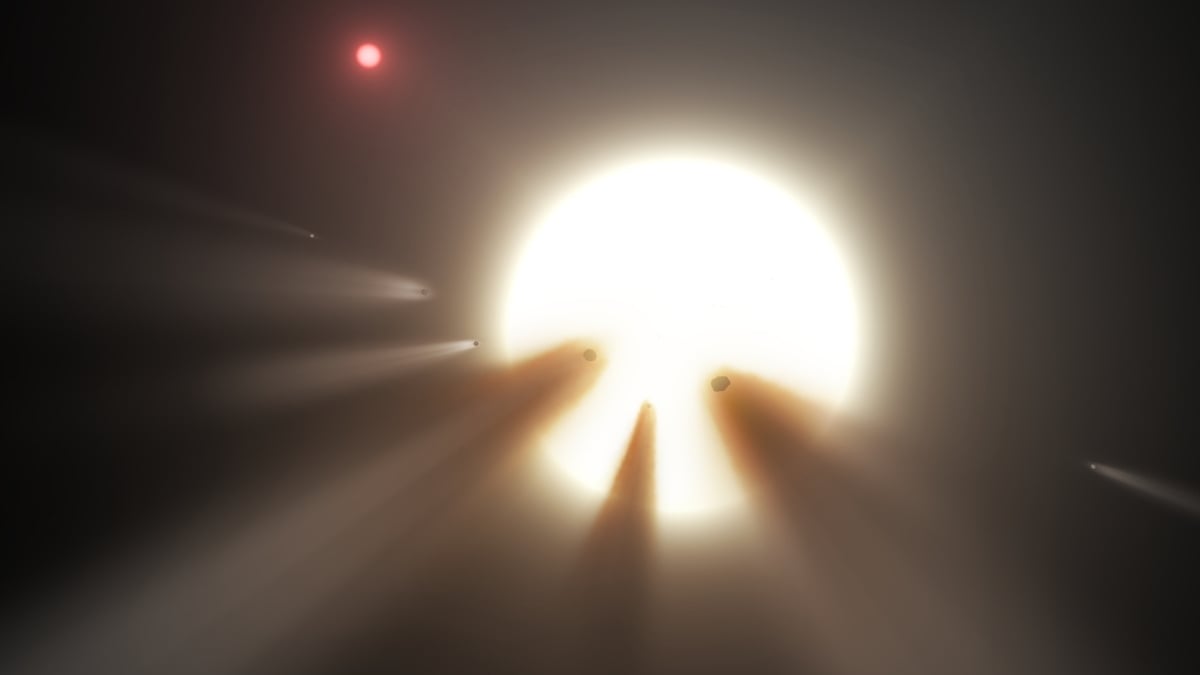
The universe is vast, teeming with billions of galaxies, each containing billions of stars. Given these astronomical odds, the question of whether we are alone often leads to speculation about extraterrestrial visitors. However, according to current scientific understanding, the reasons aliens probably aren't visiting us are compelling and rooted in fundamental physics and biology.
The Tyranny of Distance: Why Interstellar Travel Remains a Dream
The sheer scale of the cosmos presents the most significant hurdle. Even the closest star system, Alpha Centauri, is over four light-years away. Traveling at the speed of light, which is physically impossible for anything with mass, would still take over four years. Current propulsion technologies would extend this journey to tens of thousands of years.
This immense gulf of space means that even if intelligent life exists elsewhere, the energy and time required for interstellar travel are likely prohibitive. It’s a cosmic inconvenience that keeps even the most advanced civilizations grounded, so to speak.
"The distances involved are so mind-boggling that they dwarf any human endeavor. We're talking about overcoming forces and scales that make crossing oceans or even continents seem trivial by comparison."
Consider the Fermi Paradox: if the universe is so large and old, and life is likely to arise, where is everybody? One of the most plausible answers is that the barriers to interstellar communication and travel are simply too great for any civilization to overcome consistently.
The Rarity of Life: Are We Truly a Cosmic Anomaly?
While we’ve discovered thousands of exoplanets, the conditions necessary for life as we know it to arise and evolve are incredibly specific. Factors like a stable star, a habitable zone, a protective magnetic field, and the right chemical ingredients are not as common as we might initially assume.
Even if a planet has these conditions, the leap from simple organic molecules to complex, self-replicating life is a monumental step. The evolutionary path to intelligence, and then to technologically advanced civilization capable of interstellar travel, is fraught with potential dead ends. It’s possible that life, especially intelligent life, is far rarer than we’d like to believe.
This doesn't mean life doesn't exist elsewhere; it just suggests that the specific confluence of events required for a civilization to emerge and reach a point where they could visit us might be exceedingly rare. We might be the first, or one of very few, to reach this stage in our galactic neighborhood. This is why educators might find it useful to explore these concepts in the classroom, perhaps using tools like MentofyCove classroom games to engage students with scientific principles.
The Filter Hypothesis: Cosmic Dangers Lie Ahead
Another compelling scientific explanation for the absence of alien visitors is the "Great Filter" hypothesis. This theory suggests that there are significant barriers or "filters" that prevent life from reaching a stage of advanced interstellar civilization. These filters can be either behind us (meaning we've already overcome a difficult evolutionary step) or ahead of us (meaning a catastrophic event is likely to wipe out most advanced civilizations).
If the filter is behind us, it could be the origin of life itself, the development of complex cells, or the emergence of intelligence. If this is the case, then we are indeed rare. However, if the filter lies ahead, it could be self-destruction through nuclear war, environmental collapse, or uncontrolled artificial intelligence. This would mean that many civilizations reach a certain technological level but then fail to survive long-term.
The implications of the Filter Hypothesis are profound for our own future. It suggests that the reasons aliens probably aren't visiting us might be because advanced civilizations are inherently short-lived or extremely rare due to these existential threats. Understanding these potential filters can inform our own societal choices and the importance of sustainable development and conflict resolution, areas where effective Mentofy AI teaching tools can help craft engaging lesson plans.
Key Takeaways for Educators:
- The vast distances in space make interstellar travel an immense challenge.
- The specific conditions for life and intelligence to evolve may be exceptionally rare.
- Existential threats (the Great Filter) could be preventing civilizations from reaching interstellar capability.
While the idea of extraterrestrial visitors is a captivating one, the scientific evidence points towards a universe that, while potentially teeming with life, is not easily traversed. The reasons aliens probably aren't visiting us are less about a lack of curiosity and more about the fundamental limitations imposed by physics, biology, and the precarious nature of advanced civilizations. This understanding can fuel curiosity and critical thinking in students, encouraging them to explore the frontiers of science and our place within it. For educators looking to foster this spirit, resources like Mentofy is free for teachers can provide valuable tools.







 Explore AI Teaching Tools
Comments (0)
Please login to comment
No comments yet
Be the first to comment on this article