
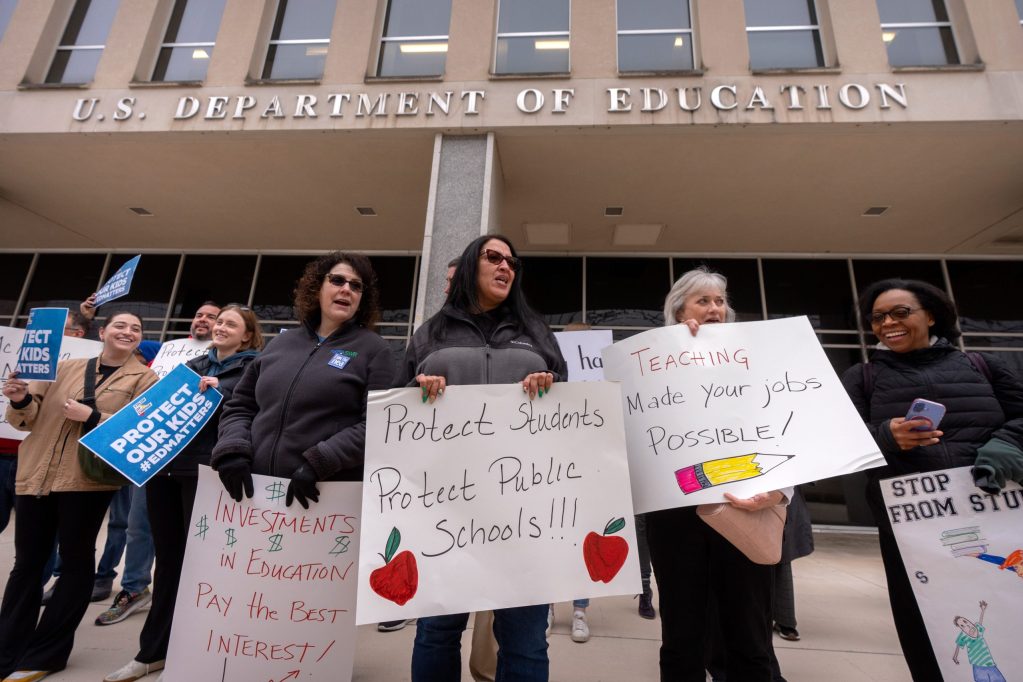
Navigating the Shifting Landscape of Education: Key Data Insights
The world of education is a dynamic ecosystem, constantly shaped by policy, funding, and societal shifts.For students, educators, and institutions alike, understanding these changes is paramount to fostering growth and achieving educational excellence.
This article delves into critical data points that illuminate the impact of recent federal administration policies on the educational sector, offering valuable insights for anyone invested in the future of learning.
We will explore how decisions at the federal level can ripple through classrooms, from K-12 to higher education, affecting millions of students and the very fabric of our educational institutions.
The Federal Footprint on Educational Institutions
Federal policies and initiatives play a significant role in shaping the educational landscape across the nation.
While the ideal of localized control in education is often discussed, the reality is that federal actions can profoundly influence curriculum, funding, and student access.
This section examines the extent of federal involvement and the direct impact it has on educational bodies and the individuals within them.
Executive Orders and Their Educational Ramifications
The use of executive orders by a federal administration can swiftly alter the direction of educational policy.
Research indicates that a notable number of executive orders have been signed, specifically targeting colleges and schools.
These directives range from the proposed dismantling of the Department of Education to the establishment of task forces focused on emerging educational technologies like artificial intelligence.
Furthermore, executive actions have sought to address issues such as school discipline, the inclusion of transgender athletes, and the mitigation of foreign influence on academic campuses.
It's also important to note that some directives, while not exclusively educational, have had indirect but significant consequences.
For instance, interpretations of immigration policies have led to restrictions on access to adult and career technical education programs, demonstrating how broad federal policies can intersect with and impact educational opportunities for diverse student populations.
Investigating Equity and Access in Education
A core function of federal oversight in education is to ensure equitable access and address discrimination.
However, the focus and intensity of these investigations can reveal administration priorities and their impact on different student groups.
This section looks at the data surrounding investigations into specific educational policies.
Focus on K-12 Transgender Policies
At the K-12 level, a significant portion of the Department of Education's investigative efforts has been directed towards policies concerning transgender students.
Data reveals a substantial number of investigations launched into how schools and state agencies are addressing issues such as bathroom access, locker room policies, and participation in sports for transgender youth.
This focus stands in contrast to the number of investigations into other forms of discrimination.
For example, the number of investigations into antisemitism and alleged racial discrimination affecting white teachers or students, while important, appears to be lower in comparison to those targeting transgender policies.
This disparity in investigative focus highlights a particular area of administrative attention within the K-12 system.
Higher Education Investigations: A Different Emphasis
The investigative landscape shifts when examining higher education.
While transgender issues have seen a notable number of investigations at the K-12 level, the inverse appears to be true for universities and colleges.
Studies indicate that the number of investigations into transgender issues in higher education is significantly lower.
Conversely, higher education institutions have faced a greater number of investigations related to antisemitism and racial discrimination.
This difference in focus between K-12 and higher education suggests varying administrative priorities and approaches to civil rights enforcement across different educational levels.
The Legal Arena: Lawsuits and Educational Policy
The intersection of federal education policy and the legal system is a critical area to monitor.
Administrations often face legal challenges regarding their policies, and the outcomes of these cases can have far-reaching implications for students and institutions.
This section explores the volume and nature of lawsuits filed against the federal education department.
Challenging Federal Education Actions
It is not uncommon for federal administrations to be subject to legal scrutiny.
However, recent periods have been marked by a significant increase in litigation specifically targeting educational policies and actions.
Lawsuits have been filed challenging various aspects of federal education initiatives, including efforts to reduce the size of the Department of Education, freeze or cancel grant funding, and dismantle diversity, equity, and inclusion programs.
The outcomes of these legal battles have been varied.
While some administration efforts have been upheld, such as the layoff of department staff, others have been blocked by courts, including certain bans on diversity initiatives and the restoration of frozen grants.
The legal challenges underscore the contentious nature of some federal education policy shifts and the ongoing debate surrounding their implementation.
Department of Education Workforce Dynamics
The operational capacity of the Department of Education is directly tied to its staffing levels.
Significant changes in workforce size can impact the department's ability to carry out its mission, from data collection to civil rights enforcement.
This section examines the fluctuations in departmental employment.
Significant Reductions in Department Staff
Following a change in federal administration, substantial reductions in the workforce at the Department of Education have been observed.
Data shows a considerable number of employees leaving the department shortly after the administration took office, through both voluntary resignations and layoffs.
These reductions have had a profound impact on various offices within the department.
For instance, key data collection and assessment bodies have seen their staff numbers drastically decrease, potentially affecting their ability to gather and disseminate crucial educational statistics.
Similarly, offices responsible for investigating civil rights violations have experienced significant staff losses, leading to concerns about their capacity to handle the volume of complaints.
While some positions were later reinstated due to congressional action or temporary recalls, the overall impact of these workforce changes on the department's functions is a significant consideration for the future of federal education oversight.
Impact on Early Childhood Education Programs
Early childhood education is a foundational stage for lifelong learning, and federal programs play a vital role in supporting these initiatives.
Changes to the structure and funding of these programs can have immediate consequences for vulnerable populations.
This section focuses on the effects on Head Start programs.
Closures and Funding Disruptions for Head Start
As part of broader workforce reductions, several regional Head Start offices were abruptly closed, leading to the termination of employees.
These offices were instrumental in overseeing free childcare services for low-income children, impacting a substantial percentage of Head Start slots.
Beyond office closures, Head Start programs have also faced disruptions in federal funding.
Temporary freezes on federal funding for various assistance programs, including Head Start, created uncertainty and delays in accessing essential financial resources.
These delays forced some centers to temporarily close, affecting thousands of children and their families.
Government shutdowns have further exacerbated these challenges, leading to prolonged closures for centers serving a significant number of young learners.
The instability in funding and operations poses a serious threat to the continuity and accessibility of these critical early education services.
International Student Enrollment Trends
The presence of international students enriches the academic environment of universities and contributes significantly to the economy.
Federal policies related to immigration and visa processing can directly influence the flow of these students.
This section examines the impact on international student enrollment.
Declines in New International Student Admissions
Recent federal policies and rhetoric have had a discernible impact on the enrollment of new international students in U.S. higher education institutions.
Concerns about political views, increased scrutiny of visa applicants, and travel restrictions have contributed to a decline in the number of new international students choosing to study in the United States.
While the overall number of foreign students may have seen a smaller decrease due to the retention of existing students, the decline in new graduate student enrollment is particularly significant.
Graduate students often constitute a substantial portion of international student populations and are a vital source of revenue for many universities, as they typically pay full tuition without relying on financial aid.
This trend has considerable implications for the financial health and diversity of American universities.
School Choice Initiatives and Tax Incentives
The concept of school choice, which allows families to select educational options beyond their assigned public schools, has been a focal point of federal education policy.
This section explores a key legislative initiative aimed at promoting school choice.
The Rise of Tax Credit Scholarships
A significant legislative achievement for school choice advocates has been the introduction of a federal school voucher program, often referred to as tax credit scholarships.
This program incentivizes individuals to donate to non-profit organizations that then provide scholarships for private school tuition, tutoring, or other educational expenses, including homeschooling costs.
A notable tax break is available for individuals who contribute to these scholarship funds, encouraging broader participation.
While states have the option to opt into this federal program, some have chosen not to participate.
However, a considerable number of states have already established their own tax credit scholarship programs, indicating a growing trend towards this model of educational funding and choice.
The Efficiency of the Office for Civil Rights
The Office for Civil Rights (OCR) within the Department of Education plays a crucial role in investigating and resolving complaints of discrimination and denial of educational access.
The efficiency and thoroughness of its operations are vital for protecting student rights.
This section examines the dismissal rates of complaints handled by the OCR.
Increased Complaint Dismissals by the OCR
Data from the Department of Education's Office for Civil Rights indicates a substantial increase in the number of complaints dismissed without a full investigation over a specific six-month period.
This rate of dismissal is notably higher compared to previous administrations.
While the department asserts that these dismissals are in line with established policies, former employees and advocates express concern that this trend suggests student and parent complaints may not be receiving adequate attention.
The significant reduction in staff within the OCR is also cited as a contributing factor to the perceived decrease in thoroughness and the potential for backlogs in case resolution.
The speed at which the OCR resolves cases that do undergo investigation remains a critical area for ongoing assessment.
Investing in Civics Education
Civic education is essential for fostering engaged and informed citizens.
Federal funding plays a role in supporting initiatives that promote understanding of government, history, and democratic principles.
This section highlights federal investment in civics education.
Significant Federal Investment in Civics Education
The Department of Education has made a substantial financial commitment to promoting civics education.
A significant amount of grant money has been awarded to numerous organizations tasked with developing and implementing civics education programs.
This represents a considerable increase in funding for this area compared to previous years since the program's inception.
Promoting patriotic education, which emphasizes an accurate and inspiring portrayal of national history and founding ideals, is a stated goal.
This initiative has also led to the formation of a coalition comprised of various organizations dedicated to advancing civics education, particularly in anticipation of significant national anniversaries.
The increased federal investment signals a renewed emphasis on the importance of civic understanding and engagement among students.
Federal Research Funding: Cuts and Freezes
Federal research funding is a cornerstone of innovation and discovery, particularly within higher education institutions.
Reductions or freezes in this funding can have a profound impact on research capacity and scientific advancement.
This section details the extent of these cuts.
Impact of Federal Research Funding Reductions
Federal research funding, a critical source of support for colleges and universities, has experienced significant cuts and freezes.
Calculating the exact amount of lost funding is complex due to the involvement of multiple agencies and ongoing legal challenges.
However, data indicates billions of dollars in National Institutes of Health and National Science Foundation money, earmarked for higher education, were either canceled or frozen.
Additionally, grants from other federal agencies, including those focused on humanities and environmental protection, have also faced cancellations.
These reductions have a direct impact on the ability of researchers to conduct vital studies and on the capacity of universities to serve as hubs for innovation.
Furthermore, proposals for future budget years suggest even more substantial cuts to federal research funding, posing a long-term challenge to the research ecosystem.
The "Compact for Academic Excellence": A Proposed Framework
Federal administrations sometimes propose frameworks or agreements to guide higher education institutions.
These proposals can come with specific conditions and incentives, aiming to align institutional practices with federal priorities.
This section examines a notable proposed compact.
Limited Adoption of the Academic Excellence Compact
The Trump administration actively sought to influence higher education institutions by proposing a "Compact for Academic Excellence in Higher Education." This initiative involved reaching out to select universities with a proposal that, if accepted, would offer priority access to federal funding in exchange for adherence to a set of demanding conditions.
These conditions included requirements such as publishing standardized test scores by demographic, capping foreign student enrollment, prohibiting transgender females from using women's facilities, and freezing tuition for a period.
Despite the offer of federal financial benefits, none of the targeted universities have signed this compact.
While some institutions did not publicly reject the proposal, they also did not accept it.
This lack of adoption indicates a significant disconnect between the administration's proposed framework and the willingness of leading academic institutions to comply with its stringent demands.
However, some universities have entered into separate agreements with the administration to regain access to federal funds, often involving substantial financial commitments and the acceptance of various conditions.
Conclusion
The data presented illustrates the multifaceted and often profound impact of federal administration policies on the entire spectrum of education in the United States.
From executive orders shaping daily school operations and investigations into student rights, to workforce changes within the Department of Education and significant shifts in research funding, the federal government's influence is undeniable.
The trends in international student enrollment, the promotion of school choice initiatives, and the legal challenges faced by the administration all contribute to a complex and evolving educational landscape.
For students, educators, and policymakers, understanding these data-driven insights is crucial for navigating the present and shaping a more effective and equitable future for education.
Mentofy remains committed to providing accessible and comprehensive learning resources that empower individuals to understand and engage with these critical issues.







 Explore AI Teaching Tools
Comments (0)
Please login to comment
No comments yet
Be the first to comment on this article